Commercial Metal Roof Coating
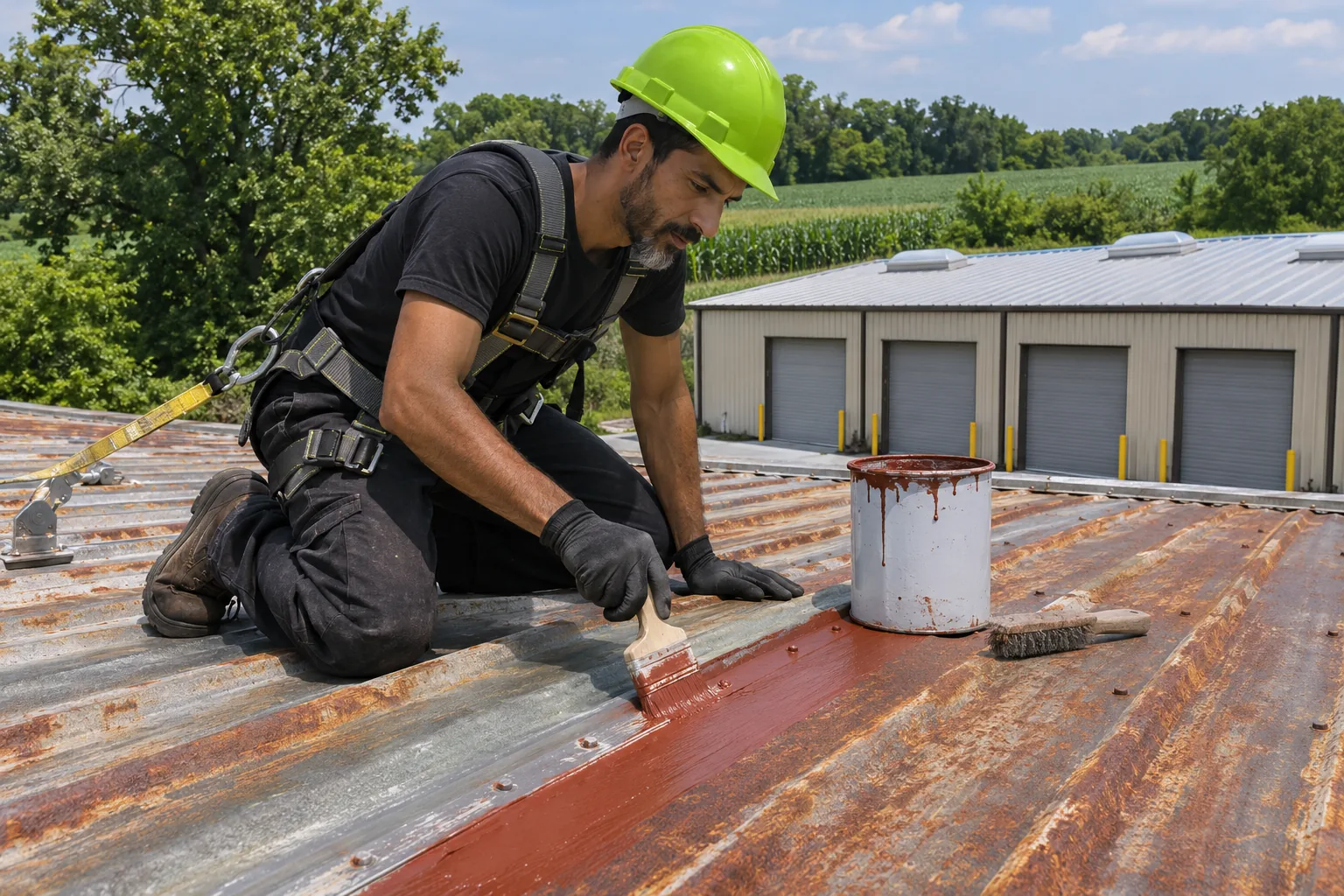
Steel roofs that need panel swaps and heavy rust work go through the full metal coating process before any topcoat choice.
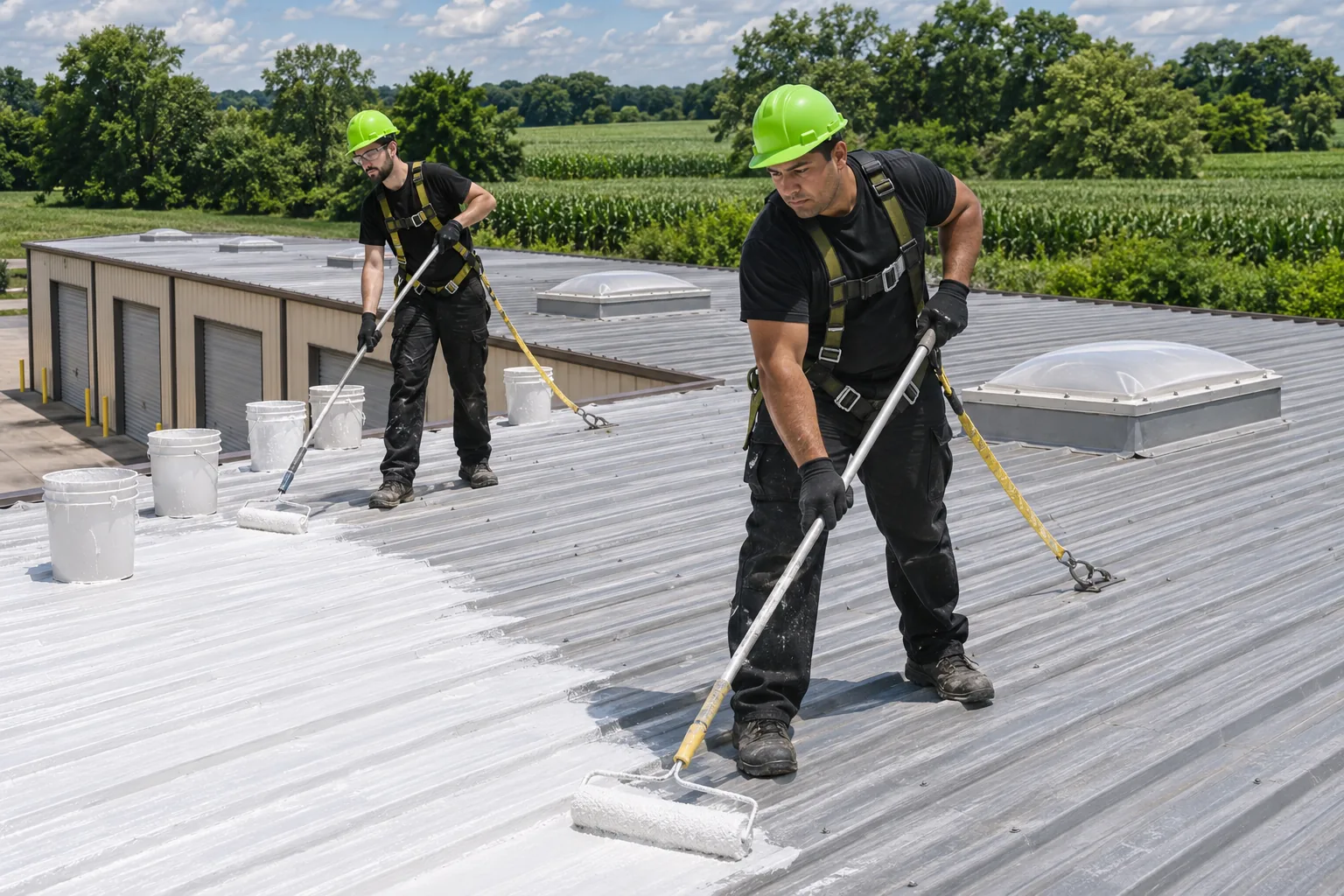
As a Noblesville acrylic roof coating contractor, we coat sloped metal roofs that shed water fast, using a bright water-based film over primed, sealed steel.
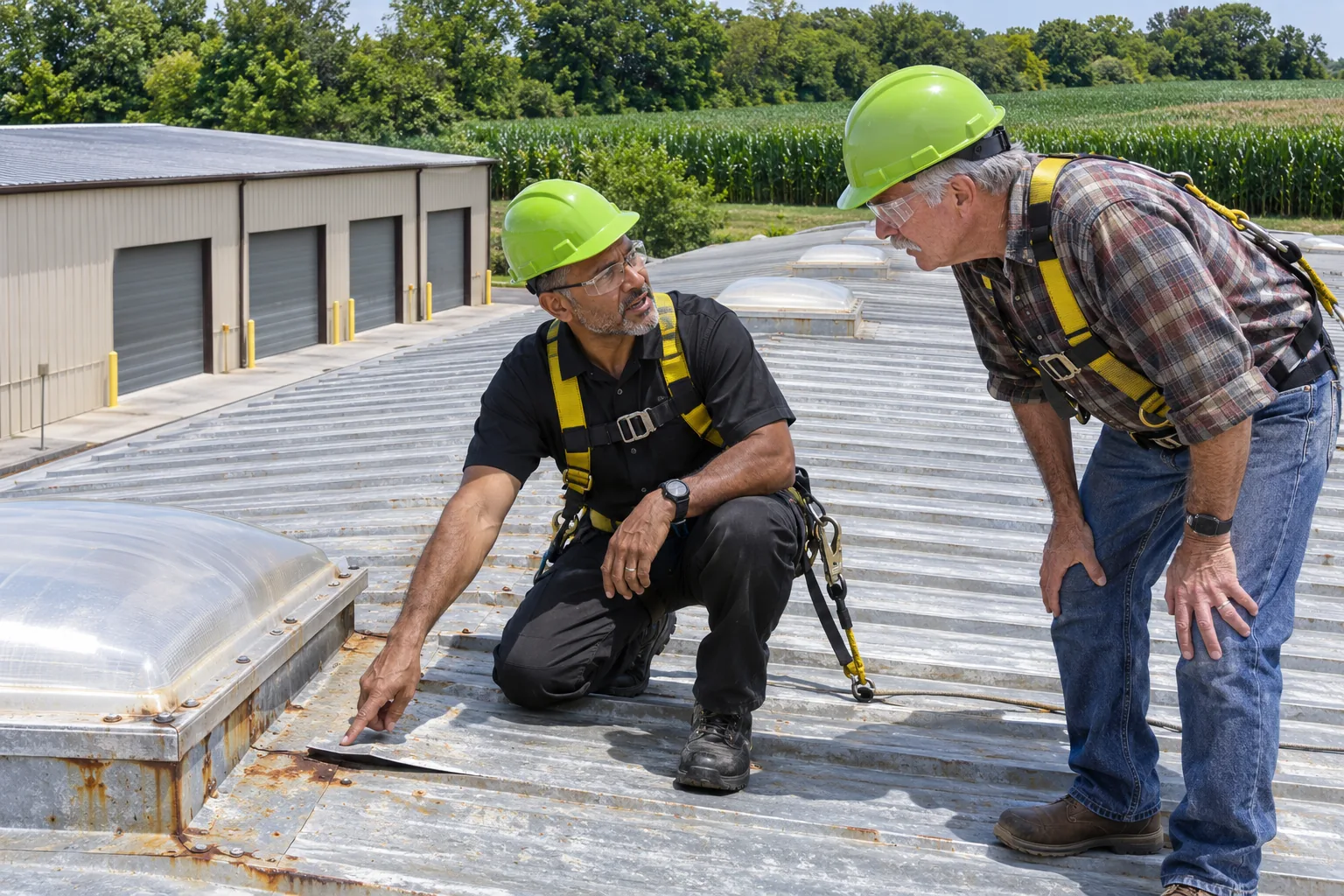
Noblesville acrylic roof coating suits steel roofs with enough pitch that rain and snowmelt run straight to the gutters. Shops, warehouses, and church halls with gabled metal roofs are common examples.
Acrylic is water-based, goes on in thinner coats than silicone, and costs less per gallon. It also takes a fresh coat of acrylic years later with little prep.
Acrylic handles weathered, well-drained steel. These are the conditions we address with it, and the one we route elsewhere.
Sun turns factory paint to powder that rubs off on your hand. Washing it off and coating restores a solid surface before rust starts.
Rust starting at lap edges brushes back to clean steel. Primer goes on first, then the acrylic coats seal the lap line.
Cracked washers let water track down each fastener. New screws with fresh washers go in before any acrylic does.
Acrylic breaks down where water sits for days. Any flat area that ponds gets silicone instead, even on an otherwise acrylic job.
Gutters hold wet debris against the panel ends. We clear them, treat the rust at the eave, and coat the panel ends with the field.
Shrunken foam closures under the ridge let wind-driven snow into the building. New closures and sealed cap edges come before the first acrylic coat.
When part of the roof falls outside what acrylic handles, one of these four systems covers it.
Steel roofs that need panel swaps and heavy rust work go through the full metal coating process before any topcoat choice.
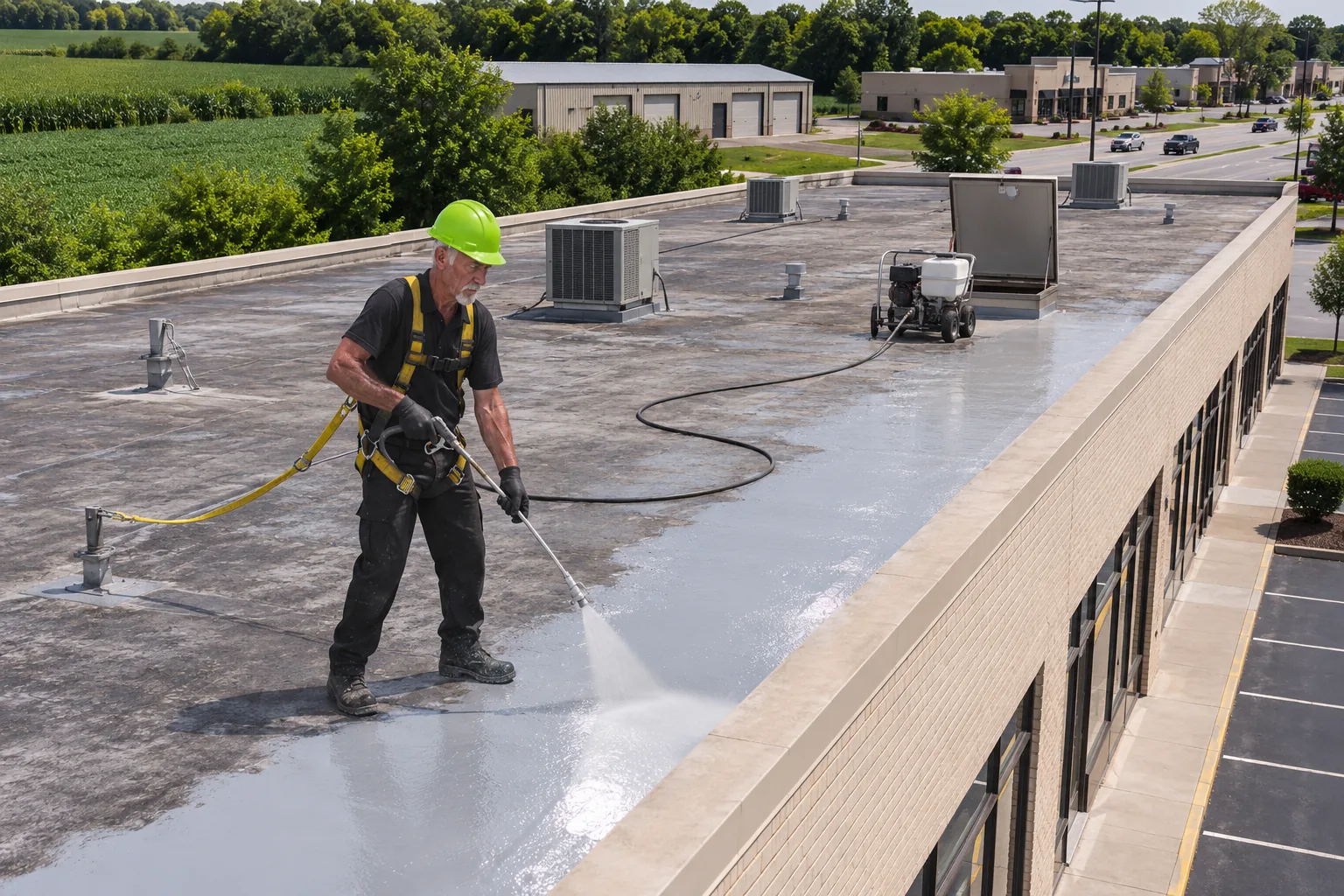
Flat areas and low spots that hold water get silicone, which keeps its bond where acrylic would soften.
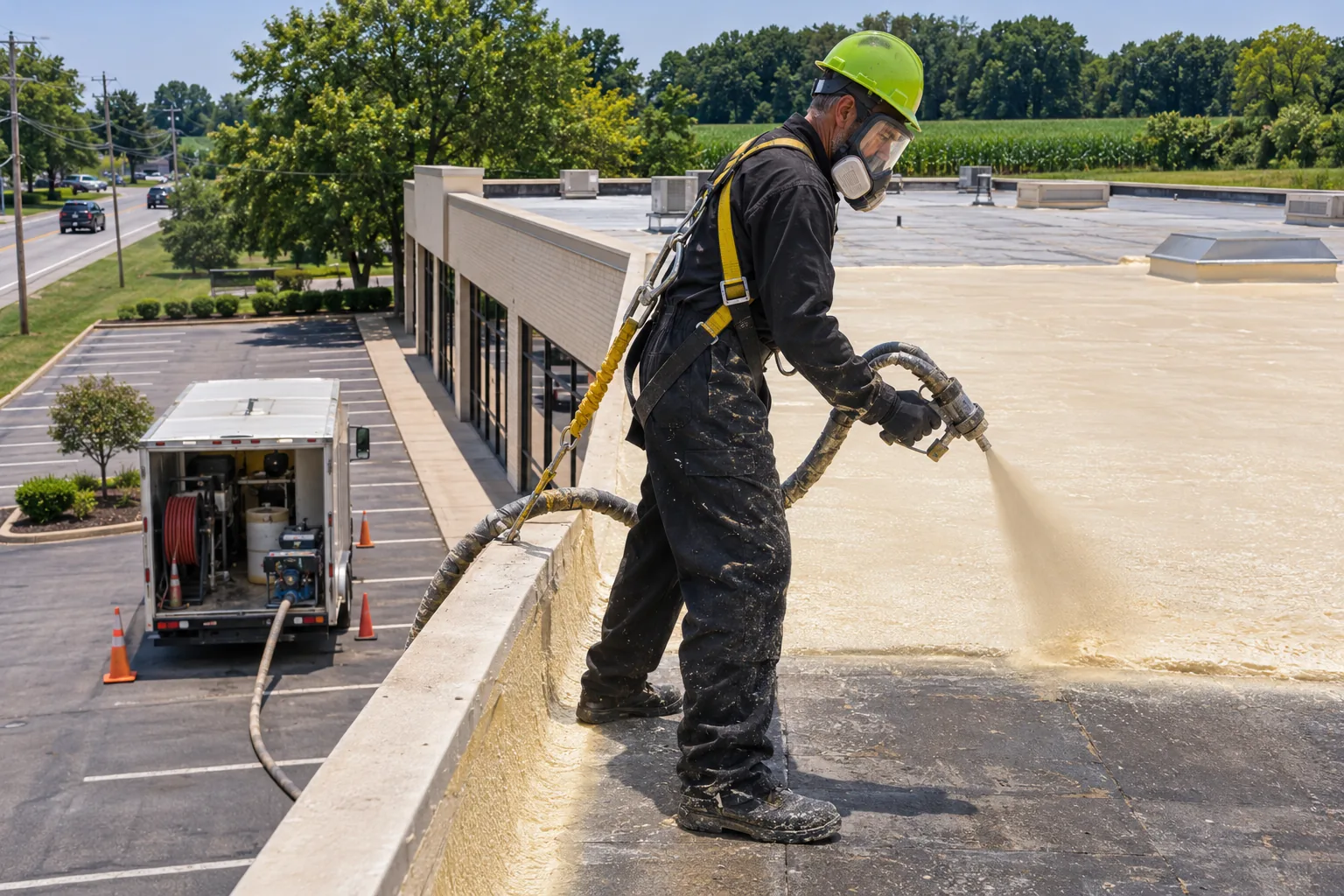
Roofs that need more insulation or a continuous layer over many leaks can take spray foam with a protective topcoat.
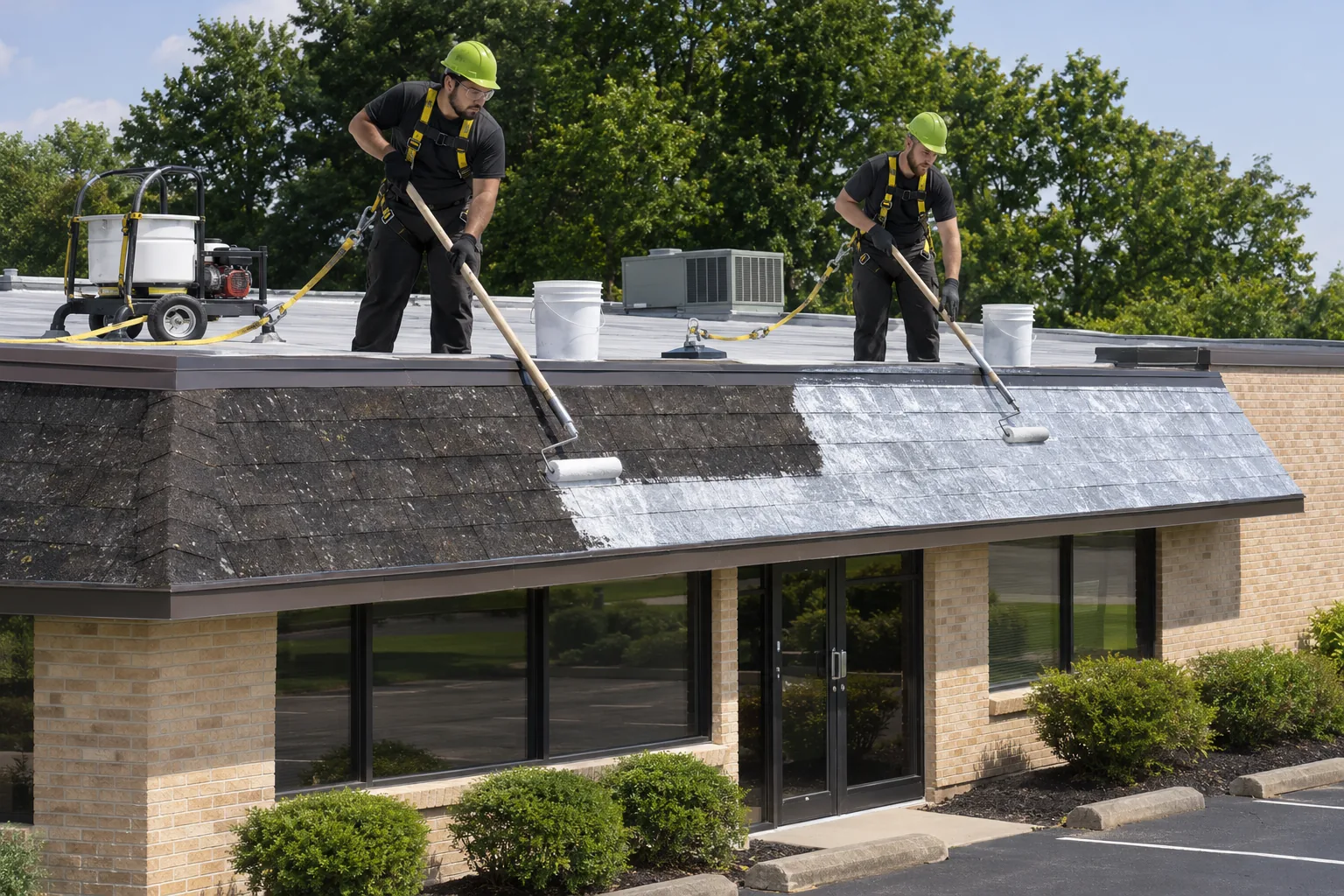
Shingled sections get a coating made for asphalt shingles, which breathes and bonds to the granules.
Acrylic suits owners who want a bright, lower-cost coating on a roof that already drains well.
It does, on roofs that shed water. Acrylic bonds to primed metal, stays flexible as panels move, and reflects sunlight that would otherwise heat the deck all afternoon.
Acrylic costs less per gallon than silicone, which matters on a large sloped roof with good drainage.
A worn acrylic film takes a fresh acrylic coat after a wash, with no special primer or stripping.
Alternating colors between coats shows any missed spots, so full coverage gets confirmed by eye and gauge.
Chalky paint is the stage just before rust takes hold on a steel roof. Coating now protects the metal while the prep is still light.
Every acrylic job follows these four stages, with weather checks built into the last two.
We walk the slopes, check drainage at every gutter, note rust and loose screws, and flag any flat areas that will need a different system.
Failed fasteners are replaced, laps are striped in with fabric, and loose trim and closures are reset so the coating covers a tight roof.
A pressure wash removes chalk and dirt. Rust gets primer, and we confirm the temperature and dew point fall within the coating label before starting.
Acrylic goes on thinner per pass than silicone, so most roofs get two or more coats in alternating colors, with wet film readings on each one.
Pitch and drainage decide most acrylic jobs. The left card shows a roof we would coat with acrylic.
When part of a roof ponds and the rest drains well, we split the job: acrylic on the slopes and silicone in the low areas, all in one schedule.
On roofs that shed water, yes. Acrylic bonds to primed steel, flexes as the panels move, and reflects sunlight. Flat areas where meltwater sits get a different system on the same job.
Film thickness, drainage, sun exposure, and HVAC service traffic set the pace of wear. Sloped, well-drained sections hold up longest. Checking for thin spots and recoating before bare metal shows keeps the system working.
Many metal roofs here carry acrylic coating on metal roofs with good pitch. After cleaning, rust work, and screw and seam sealing, it goes on in several coats and handles the swing from January cold to July heat.
Two or more over primer, because acrylic builds thinner per pass than silicone. Alternating colors between coats shows coverage, and we measure thickness during the work rather than counting coats alone.
Each acrylic product lists a minimum surface and air temperature and needs dry hours to cure before dew or rain. In central Indiana that usually means late spring through early fall for coating days.
Get a coating range from the ballpark form, or call to set up a roof walk that checks pitch, drainage, and rust.