Commercial Metal Roof Coating
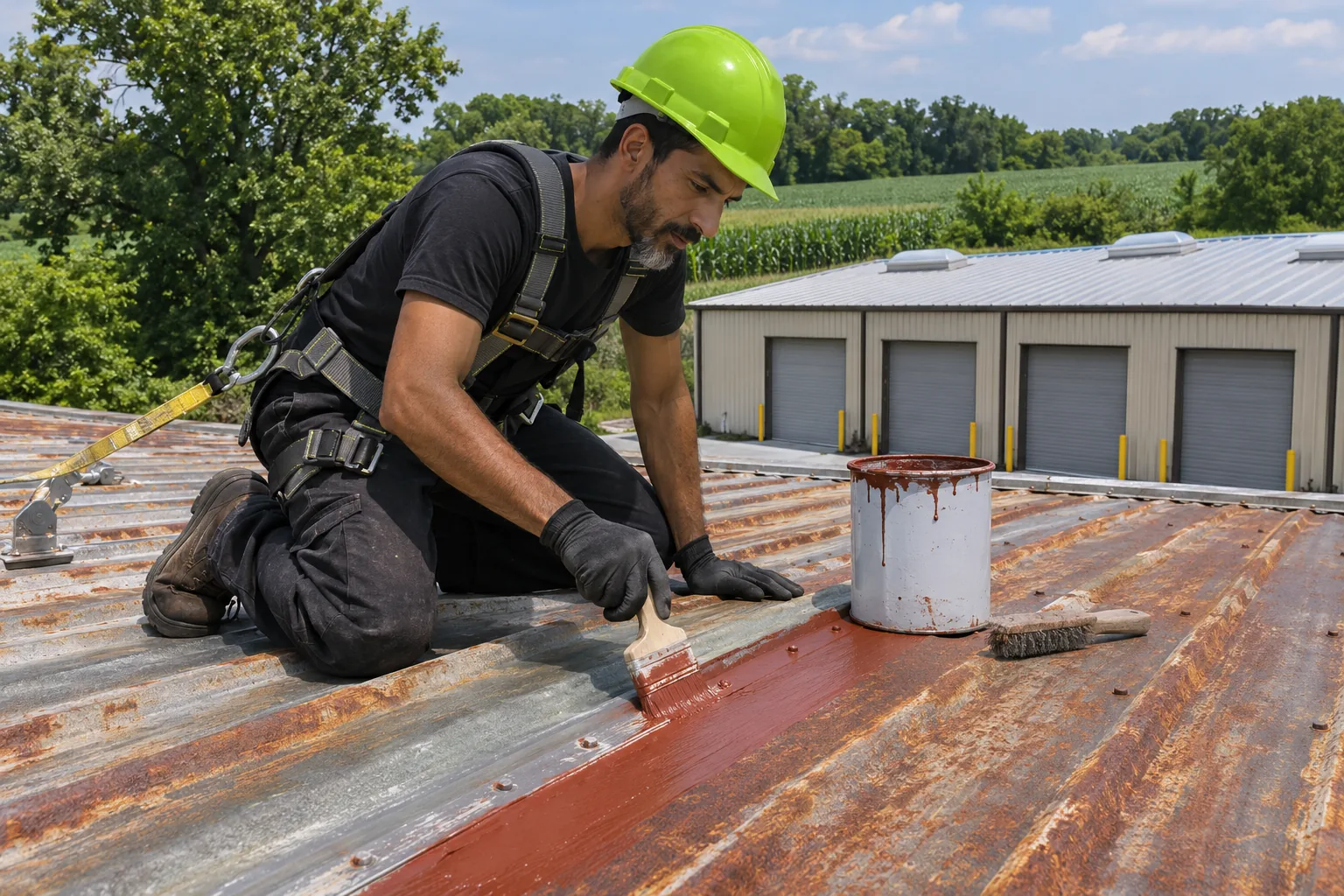
If the steel roof leaks at a few screws and laps rather than everywhere, the metal coating process fixes it with less material.
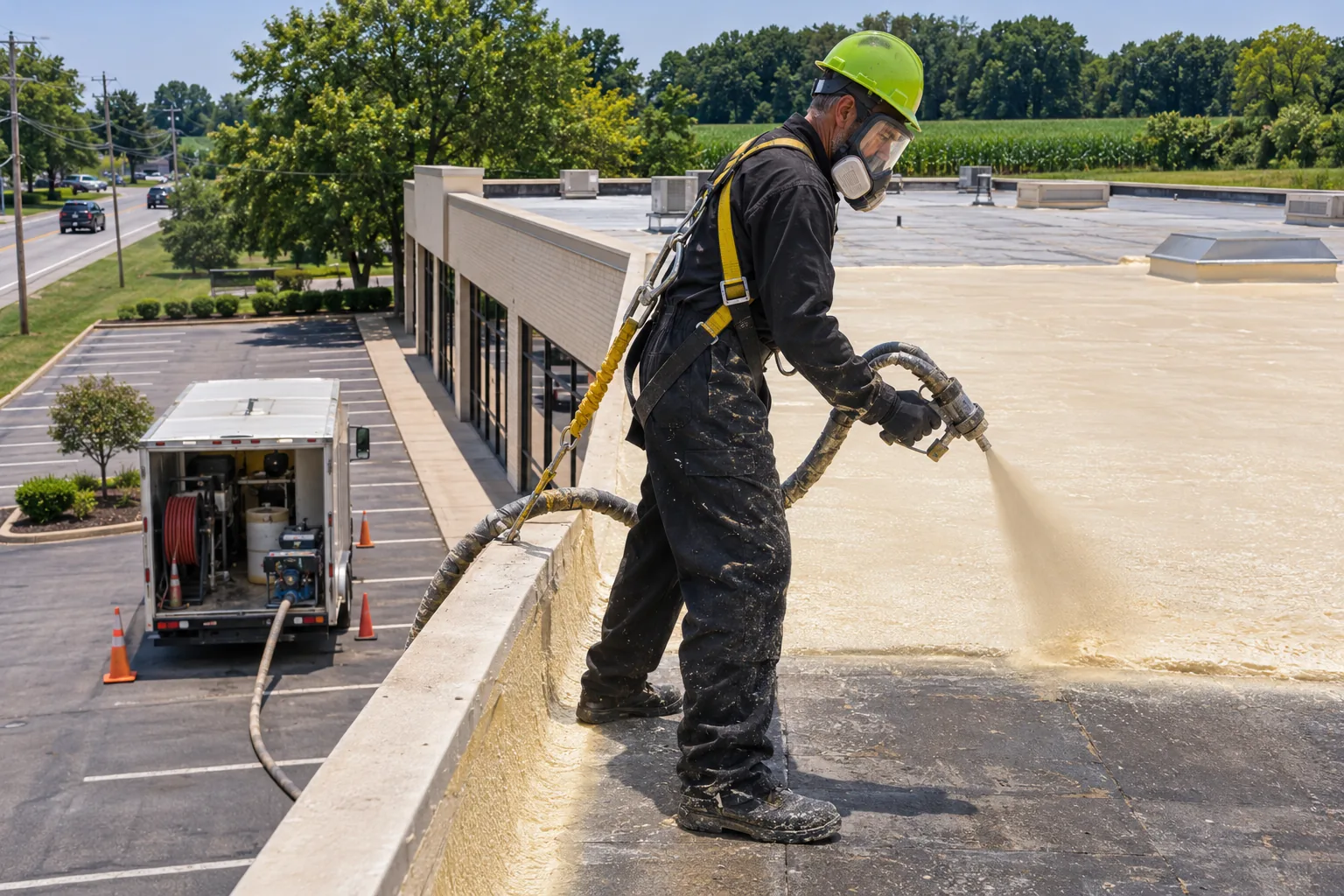
As a Noblesville spray foam roofing contractor, we spray one continuous foam layer over leaking metal and built-up roofs, then seal it under a protective topcoat.
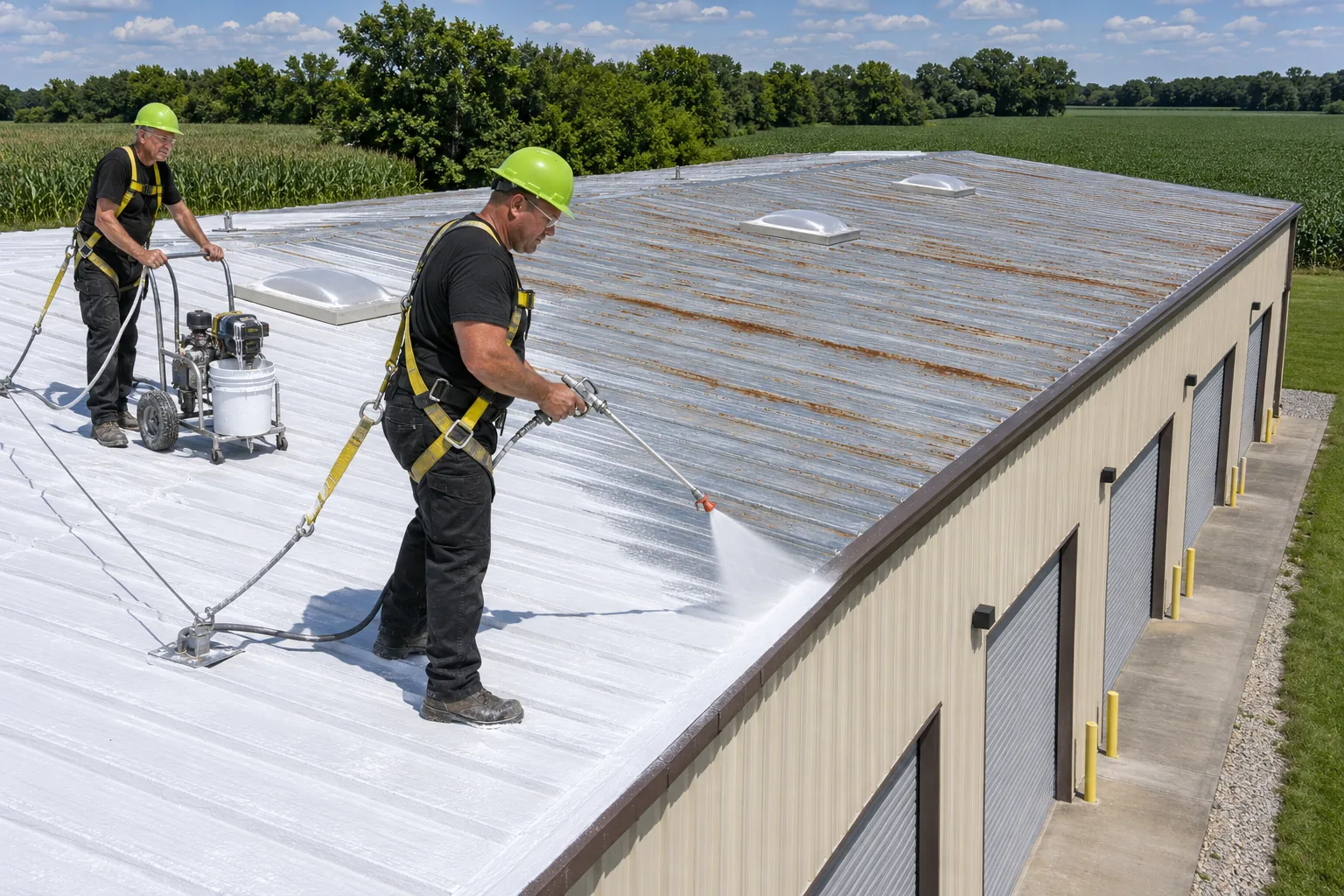
Noblesville spray foam roofing fits roofs that leak at many points at once: old metal with hundreds of laps, or built-up roofs with blisters and split seams.
Foam goes on as a liquid, expands, and cures into one solid layer that covers every seam and fastener. A coating on top shields it from sunlight and water.
Foam works best on a specific mix of problems. These are the conditions that point us toward it.
When water gets in at lap after lap across the field, sealing each one is slow. Foam covers all of them in one continuous layer.
Uninsulated metal roofs drip condensation and lose heat. Foam adds insulation on top of the deck while sealing it.
Foam can be sprayed thicker in places to push water toward drains, which fixes ponding a coating alone would leave.
An existing foam roof with a thin or chalky topcoat needs a fresh coat before the foam itself weathers. We clean, repair, and recoat.
Moisture readings come first, because soaked felts or insulation have to come out before any spraying.
On older built-up roofs the drains sometimes sit above the surrounding surface. Foam can be tapered down to them so water reaches the drain bowl.
Foam is not the answer for every roof. These four systems cover the cases where something lighter fits better.
If the steel roof leaks at a few screws and laps rather than everywhere, the metal coating process fixes it with less material.
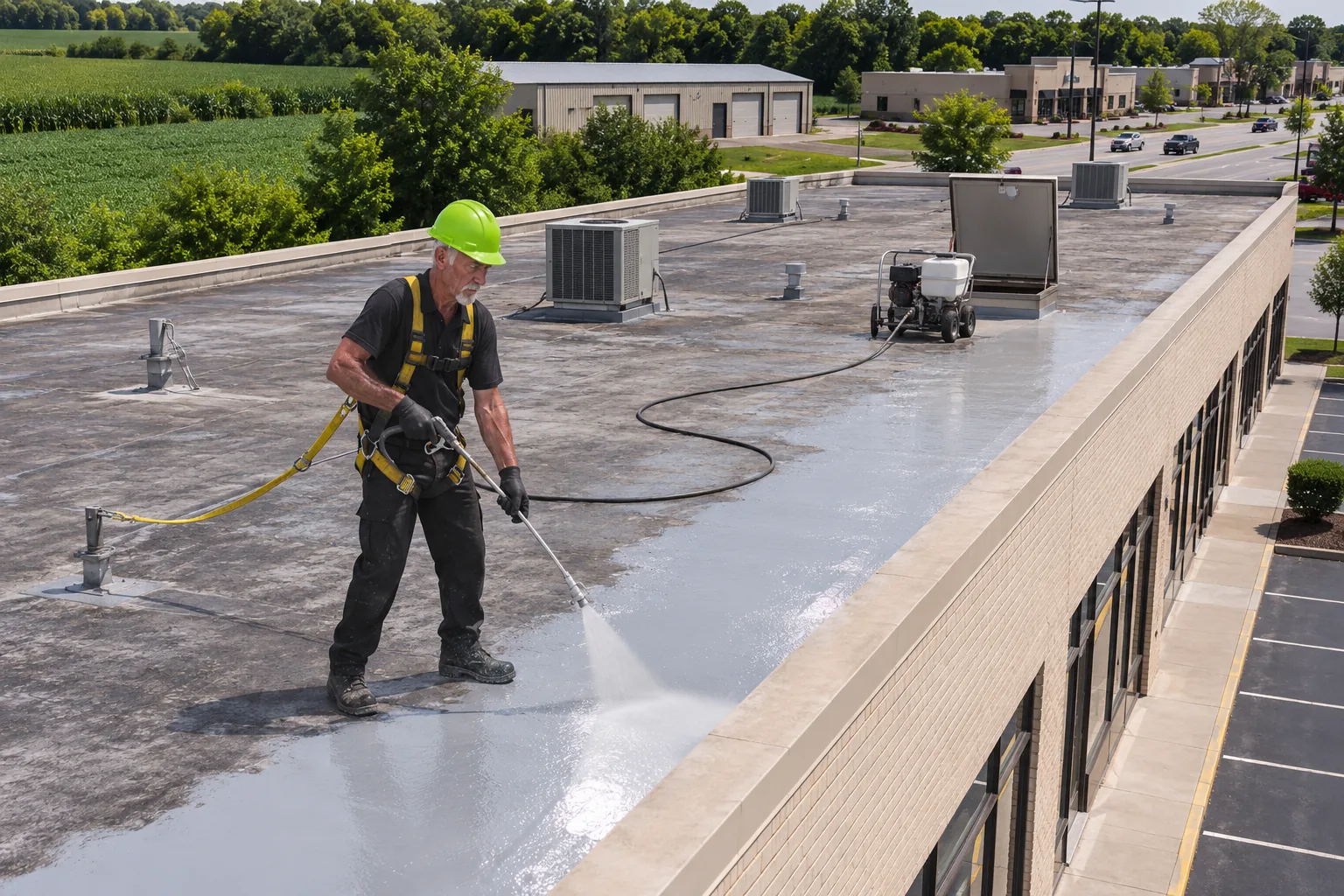
Silicone is the usual topcoat over foam, and on its own it handles low-slope roofs with ponding near curbs.
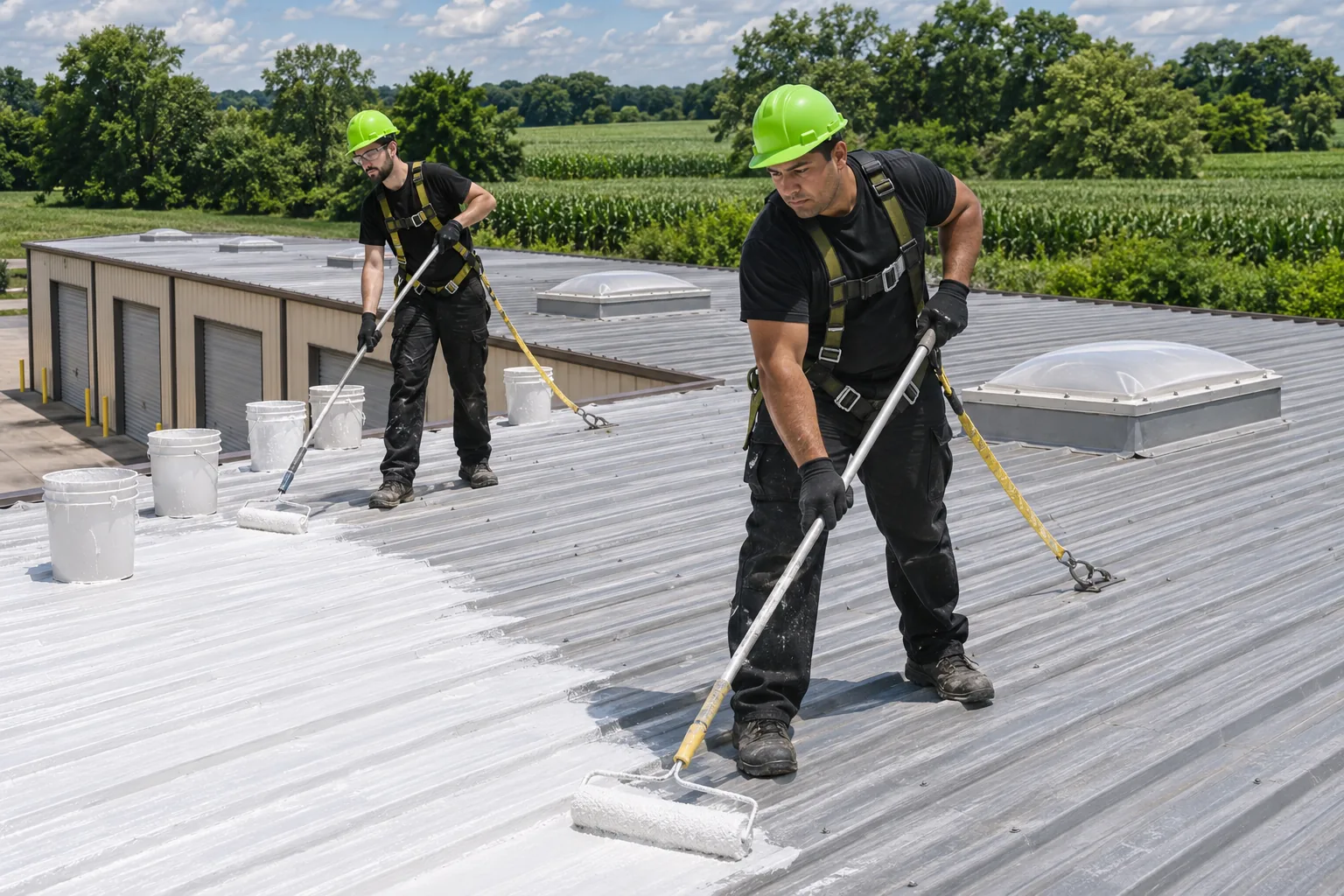
Acrylic can top foam on roofs that drain well, and on sloped steel it works as a lower-cost coating by itself.
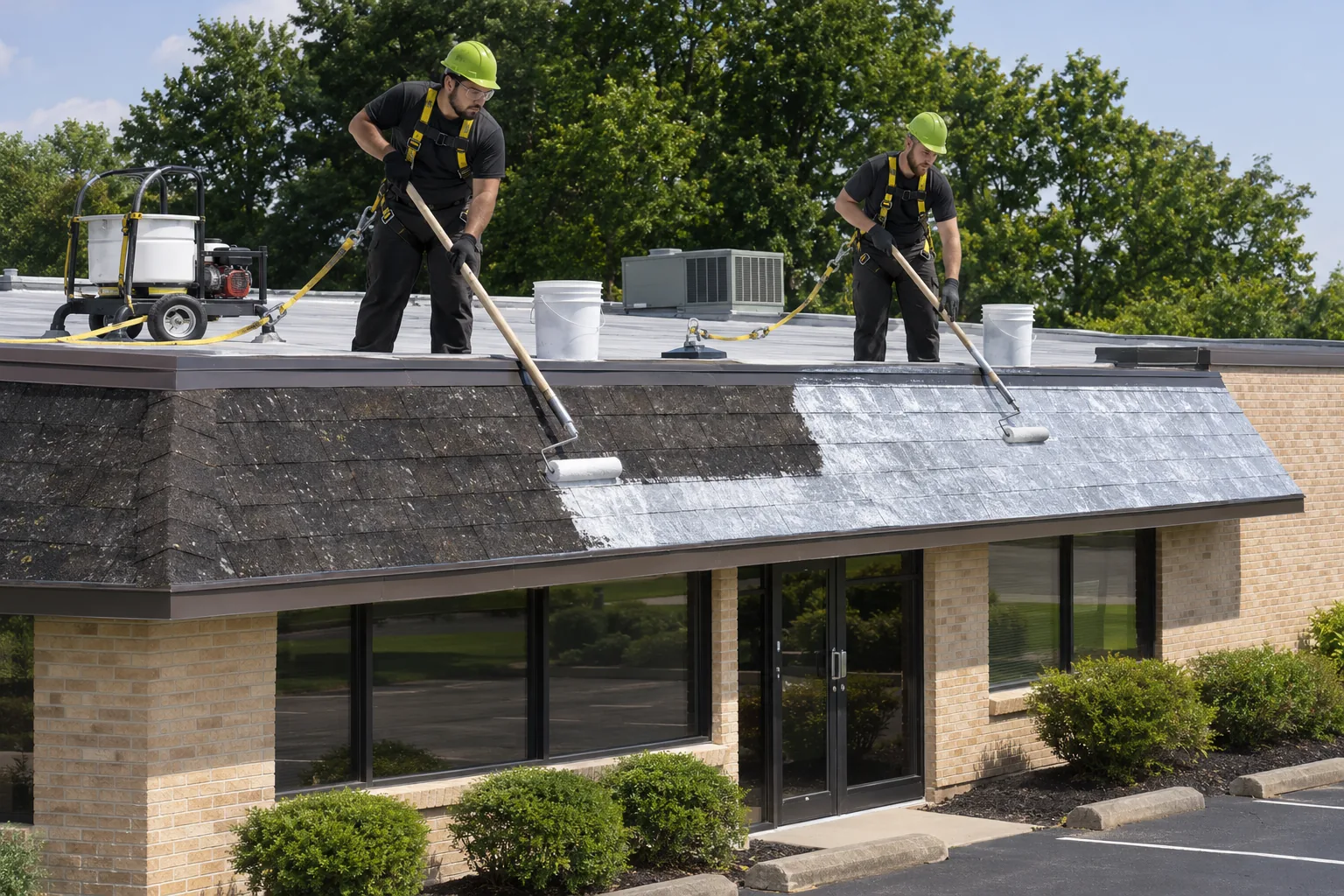
Shingled areas of the same building get a shingle-specific coating instead of foam.
Foam plus a topcoat gives a roof three things at once: a seal, insulation, and better drainage.
Spray foam bonds to the roof as one unbroken layer, so there are no laps or fastener holes left in the field for water to find, even under drifting snow.
Foam adds insulation on top of the roof, which can reduce condensation drips under bare steel in winter.
Cured foam weighs little, so it adds far less load to the framing than a new built-up roof would.
Thicker passes in low areas move water toward drains instead of leaving it sitting by the curbs.
When the leaks keep moving, the whole field is tired. A roof walk shows whether foam over everything costs less than chasing laps one at a time.
Foam jobs need dry, calm days, so the schedule is built around the weather after the first two stages.
We check the deck, take moisture readings across the field, and core any built-up roof to see what is under it. Wet areas get marked for removal.
Soaked insulation and felts come out, damaged deck sections are repaired, and loose metal is fastened so the foam bonds to a solid base.
The surface is cleaned and dried, parked cars and nearby walls are protected from overspray, and we spray only on dry, low-wind days.
Foam goes on in passes to the planned thickness, with extra depth at low spots. A silicone or acrylic topcoat follows to protect it from sunlight.
Spray foam roofing pros and cons come down to the roof and how it is used. The left card shows a roof where foam pays off.
The foam lasts as long as its topcoat protects it. Foam thickness and upkeep matter too, but the coating keeps sunlight and water off, so repairing punctures and recoating when it wears thin keeps the foam in service.
Recoat once inspections show the topcoat thinning, chalking heavily, or exposing foam. We clean the roof, cut out and refill damaged foam, and apply a new topcoat, which saves the foam from removal.
On the plus side: no seams, added insulation, low weight, and slope built toward drains. On the minus side: it needs dry, calm weather to spray, overspray control near cars and buildings, and a topcoat kept in good repair.
Punctures from dropped tools and heavy foot traffic are the main concern, along with recoating over time and weather limits when spraying. Walkway pads at service routes protect the foam on roofs with frequent equipment work.
Over metal, foam fills the panel ribs and covers every screw and lap in one pass. The panels must be attached firmly and free of heavy rust, so loose or rusted-through steel is fixed before spraying.
Send your roof size through the ballpark form, or call to book a moisture survey and roof walk before deciding on foam.