Commercial Metal Roof Coating
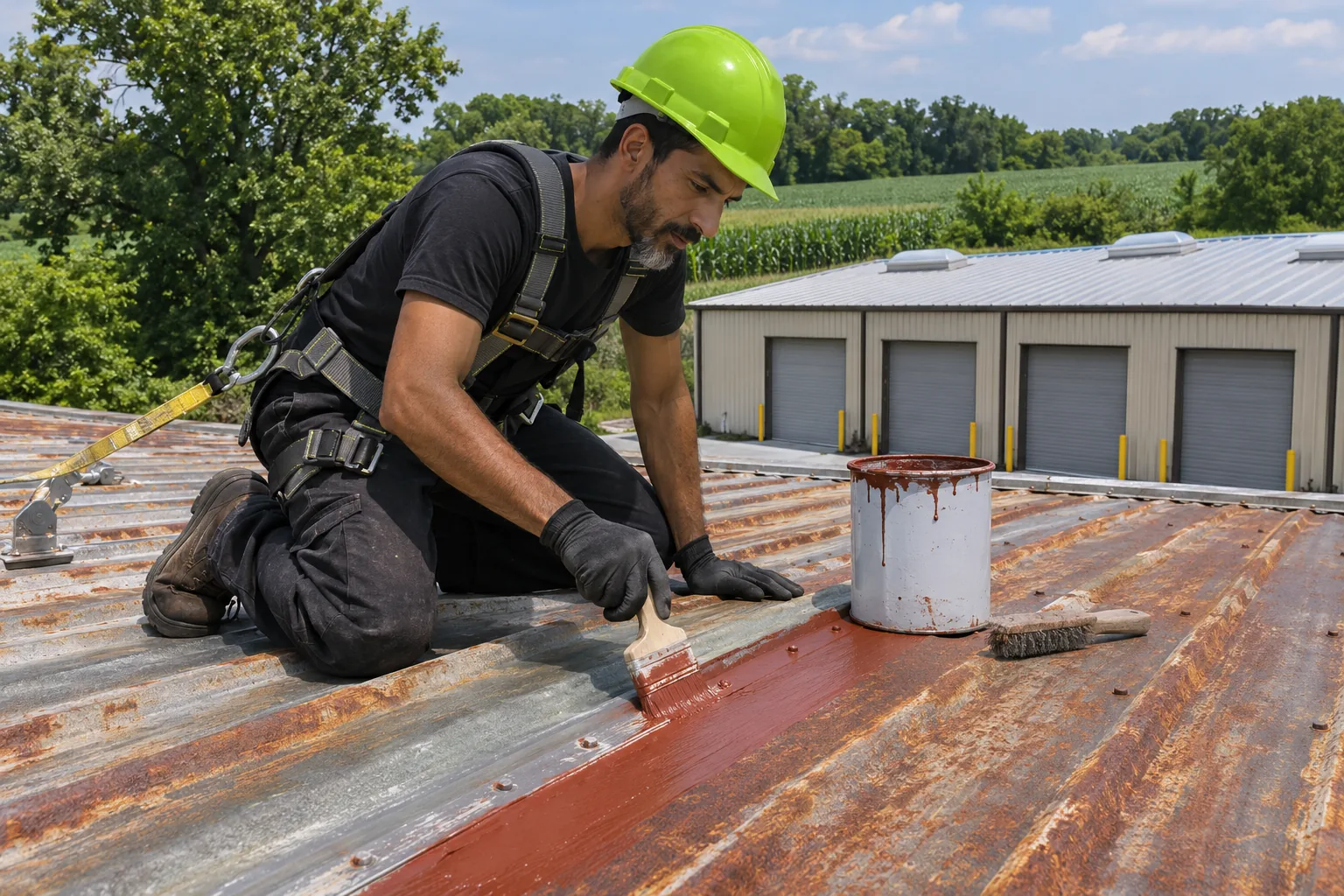
Sloped steel roofs with rust and loose screws start with the full metal coating process, and silicone can be the topcoat on that work.
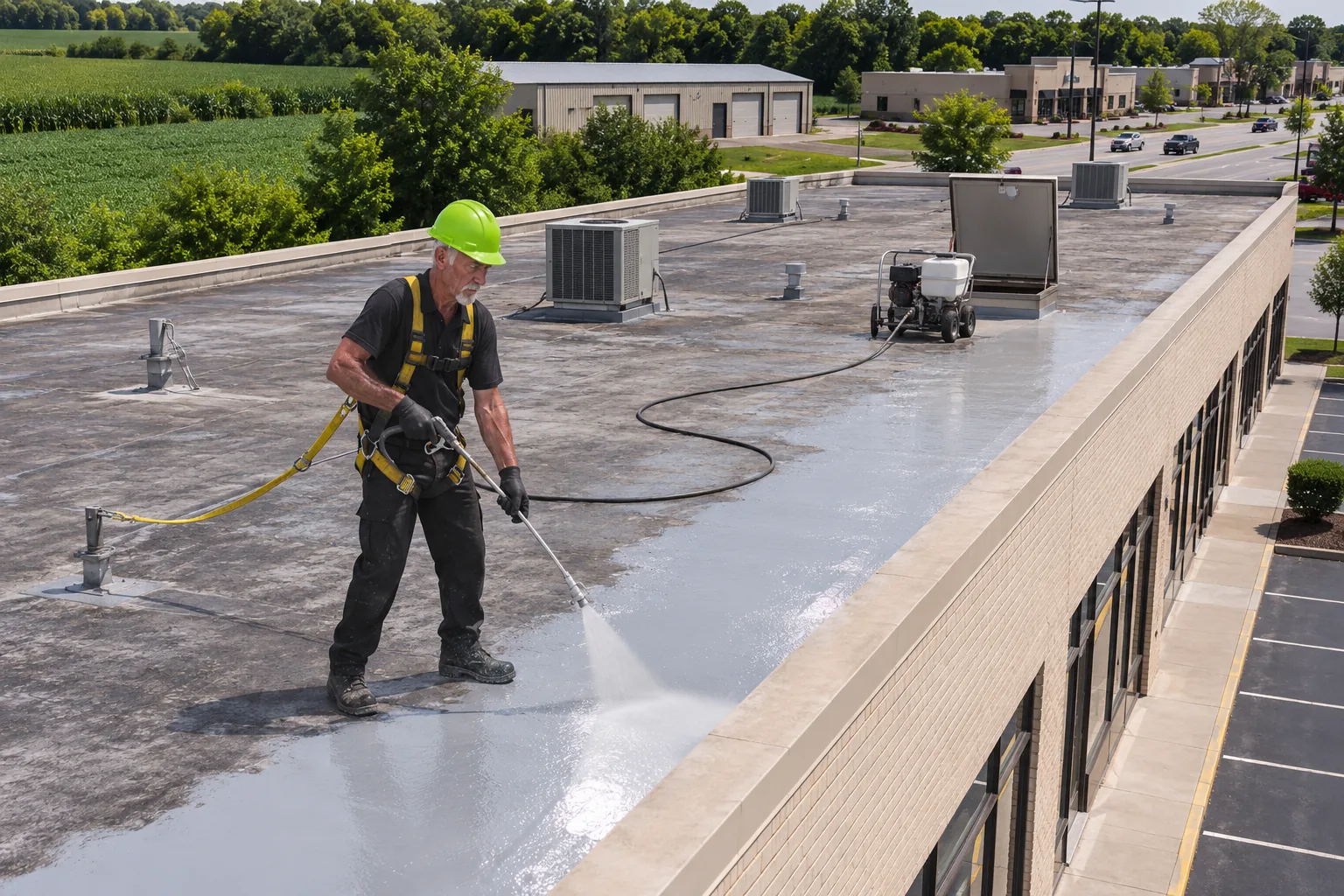
As a Noblesville silicone roof coating contractor, we coat low-slope metal and single-ply roofs where water sits after rain or snowmelt, after the seams and screws are sealed.
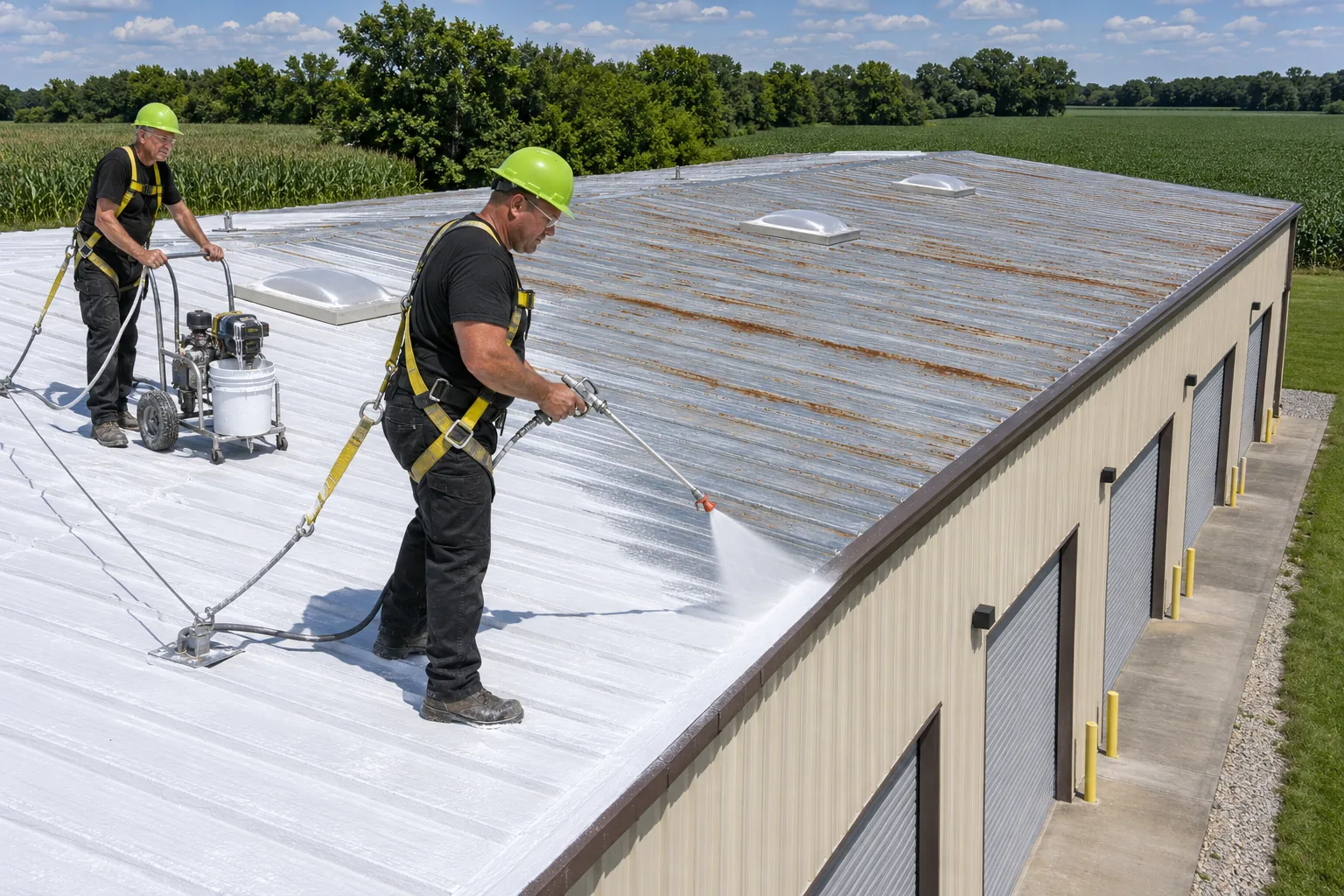
Noblesville silicone roof coating goes where water lingers: low spots beside curbs, gutter lines on shallow metal roofs, and flat single-ply sections over offices and shops.
Silicone stays flexible through cold snaps and resists standing water and sunlight. It goes on thick in fewer passes, which keeps a job on schedule when the weather window is short.
Silicone is the answer for a specific set of problems. Here is what we look for before recommending it.
Low areas that stay wet break down acrylic and asphalt coatings fast. Silicone tolerates that standing water, so those sections get it.
Old membrane seams pull apart at the corners and edges. We weld or strip them in before silicone goes over the top.
Debris holds water on the roof longer than it should. Drains get cleared and their clamping rings checked as part of the prep.
Sun breaks down old paint into a powder that blocks adhesion. A pressure wash removes it so the silicone bonds to the metal.
Water that found a way in tends to collect under the lowest areas. Moisture readings find it, and wet board is replaced before coating.
Rooftop unit curbs on flat sections often sit in a puddle after rain. We reinforce the curb flashing with fabric so silicone has a sealed edge to wrap.
Silicone fits many roofs, though not all of them. These four systems cover what it does not.
Sloped steel roofs with rust and loose screws start with the full metal coating process, and silicone can be the topcoat on that work.
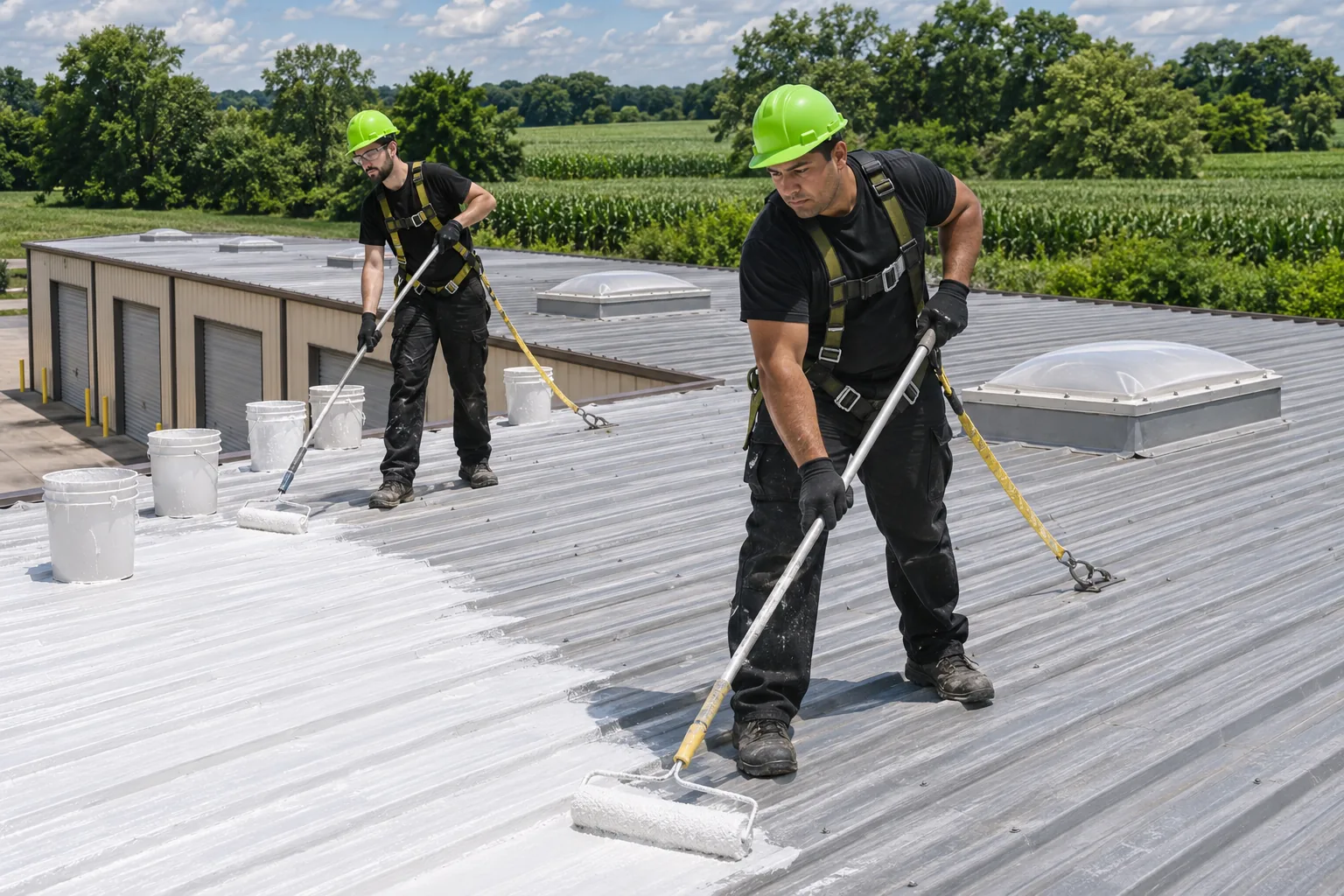
Roofs that drain well and sit in full sun get acrylic, which costs less per gallon and takes a fresh coat of acrylic later.
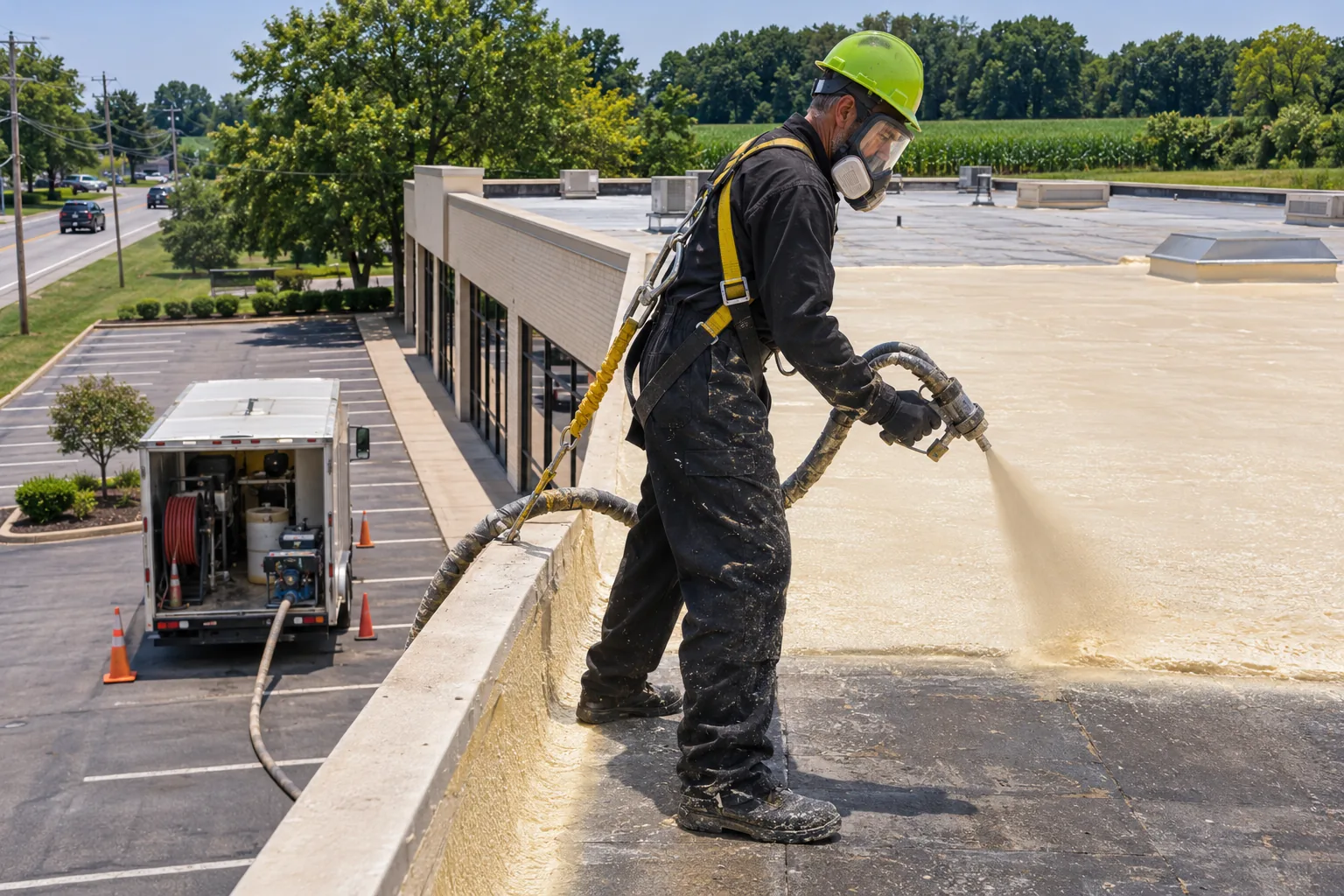
If the roof needs insulation and slope built toward drains, spray foam with a silicone topcoat handles both at once.
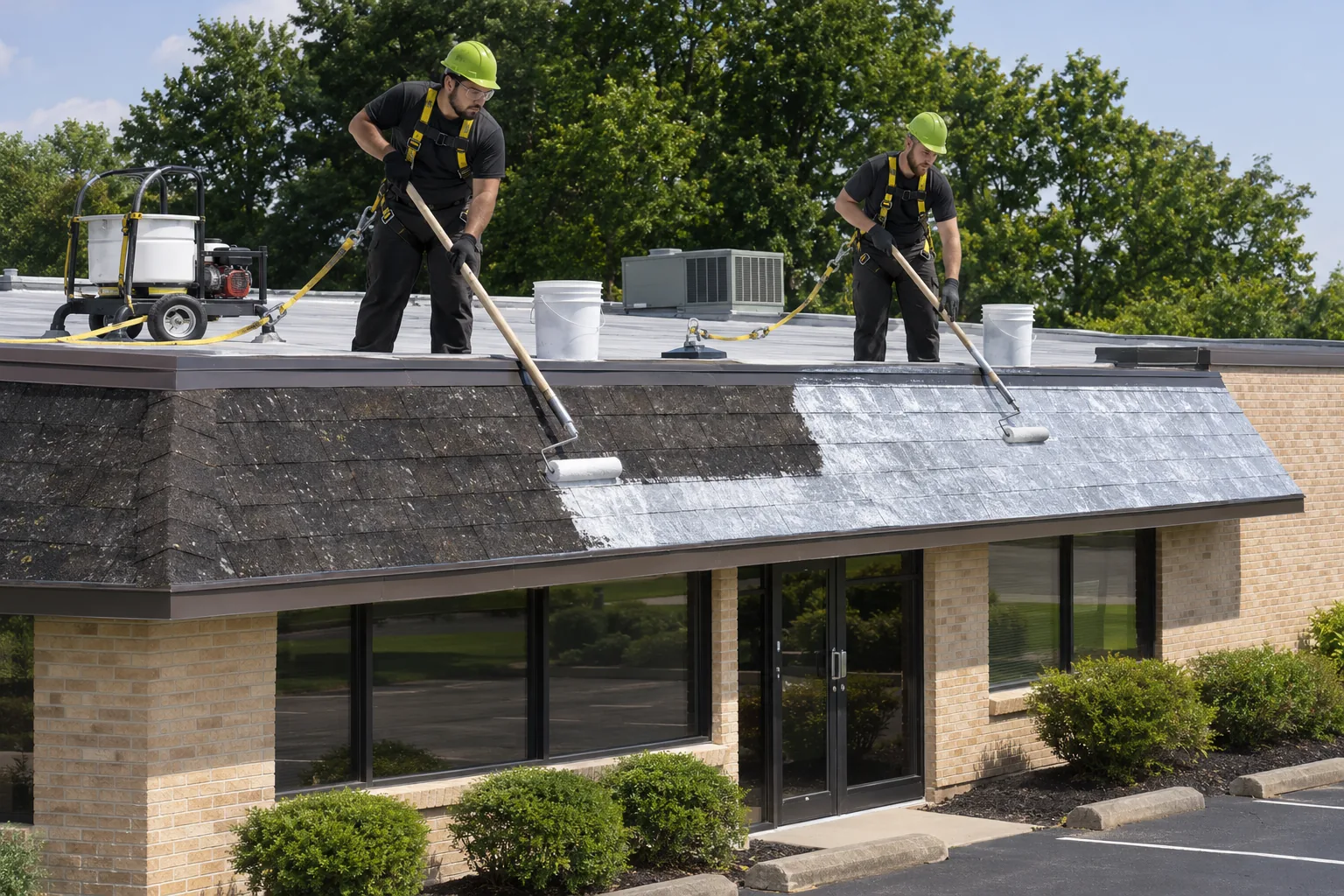
Shingled sections on the same building get a breathable shingle coating, since silicone is not made for asphalt granules.
Silicone brings a few specific strengths to low-slope roofs in central Indiana.
It does. Silicone keeps its bond and film under standing water that would soften acrylic, so the low areas around curbs and gutters stay sealed between rains.
High-solids silicone builds film quickly, so most roofs reach the specified thickness in one or two passes.
Silicone stays soft at low temperatures, moving with the panels as they shrink on January nights.
Ultraviolet light breaks down many coatings, while silicone resists it and keeps reflecting heat in July.
Two days of standing water near rooftop units is a sign the low spots need silicone. A roof walk maps those areas before the next freeze.
The order stays the same on every silicone job, from the first roof walk to the final readings.
We map where water collects, check seams and drains, and take moisture readings across the low areas. The repair list and photos come first.
Split seams are welded or stripped in, failed screws are replaced, and drains are cleared so the roof sheds what it can before coating.
A pressure wash takes off dirt and chalk. Rusted steel and some single-ply surfaces get primer, and we test adhesion before spraying.
Most roofs get one or two passes, set by the dry film thickness the specification calls for. Wet film readings guide each pass.
The two systems overlap, but drainage usually decides. The left card describes a roof that suits silicone.
Many roofs end up with both: silicone on the flat sections that hold water and acrylic on the slopes that drain, priced together in one scope.
It works well once the steel is cleaned, primed where rusted, and the screws and seams are sealed. Silicone flexes with the panels and holds up under standing water. Panels rusted through still need replacing before any coat.
One or two passes after primer and seam work, depending on the dry film thickness the specification calls for. We read the wet film while spraying and add a pass wherever a reading comes up short.
Service life follows the applied thickness, the prep under it, dirt buildup, and how much foot traffic hits it near rooftop units. Washing the roof, patching punctures, and adding silicone when it wears thin keep it working.
Acrylic costs less per gallon, but silicone reaches thickness in fewer passes and handles ponding. On a roof with low spots, silicone often comes out ahead because acrylic would need repairs where water sits.
Use the ballpark form for a coating range on your roof size, or call to have the low spots mapped on a roof walk.