Commercial Metal Roof Coating
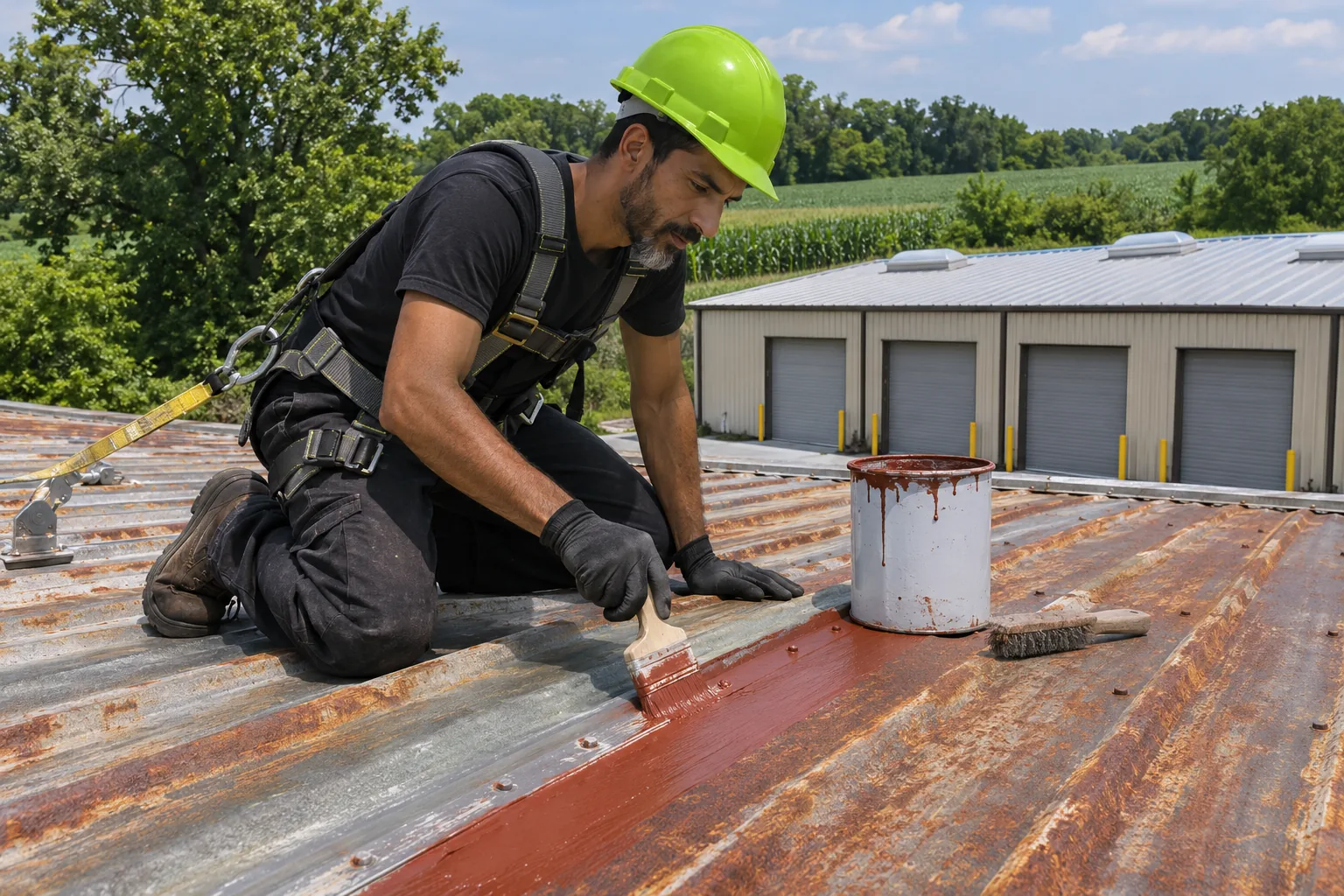
Hail-dented and winter-worn steel roofs get the full process: repairs first, then primer, fabric, and the field coat.
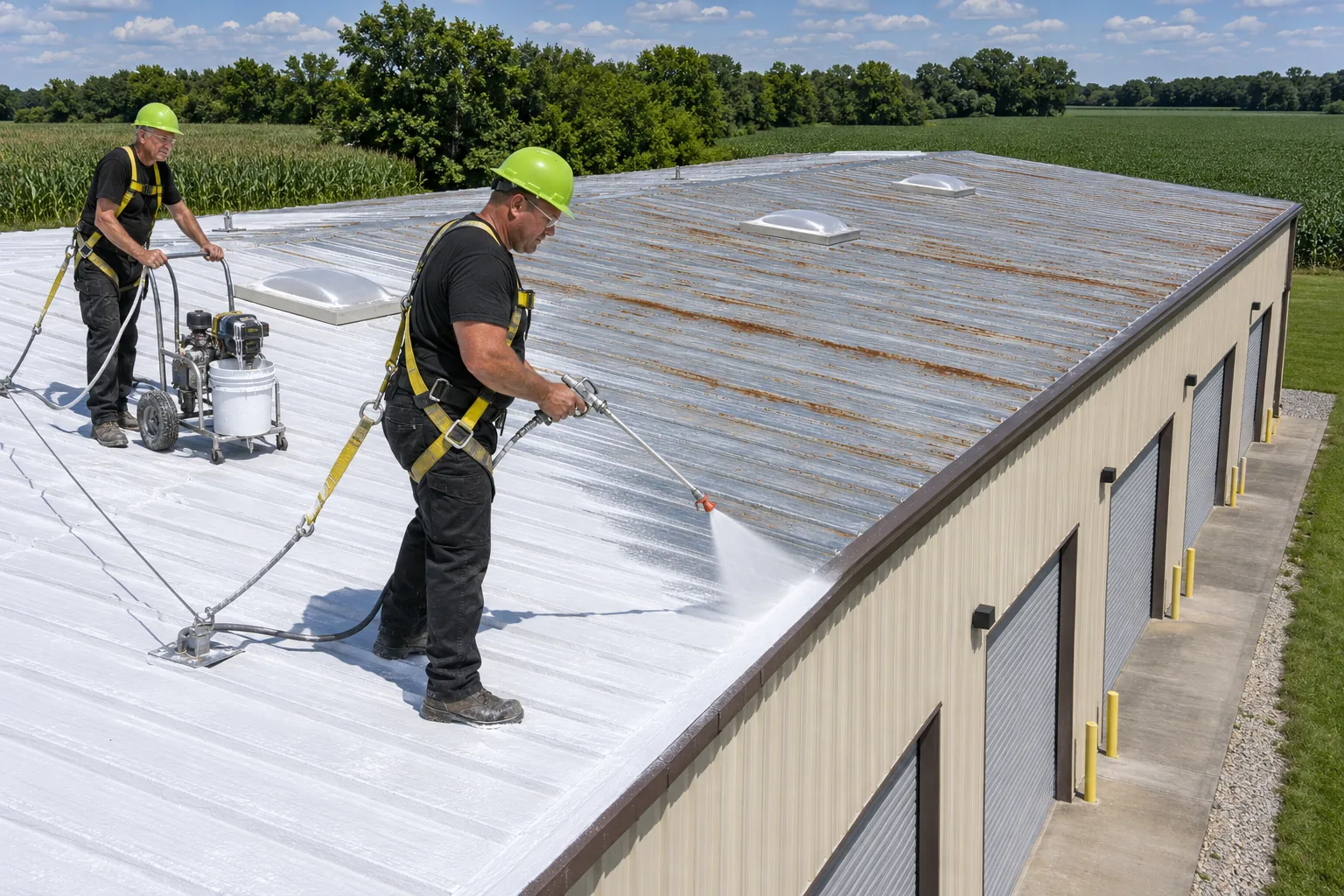
As a Tipton metal roof coating contractor, we assess hail dents and freeze-thaw wear on steel roofs, repair what coating will not cover, then coat the rest.
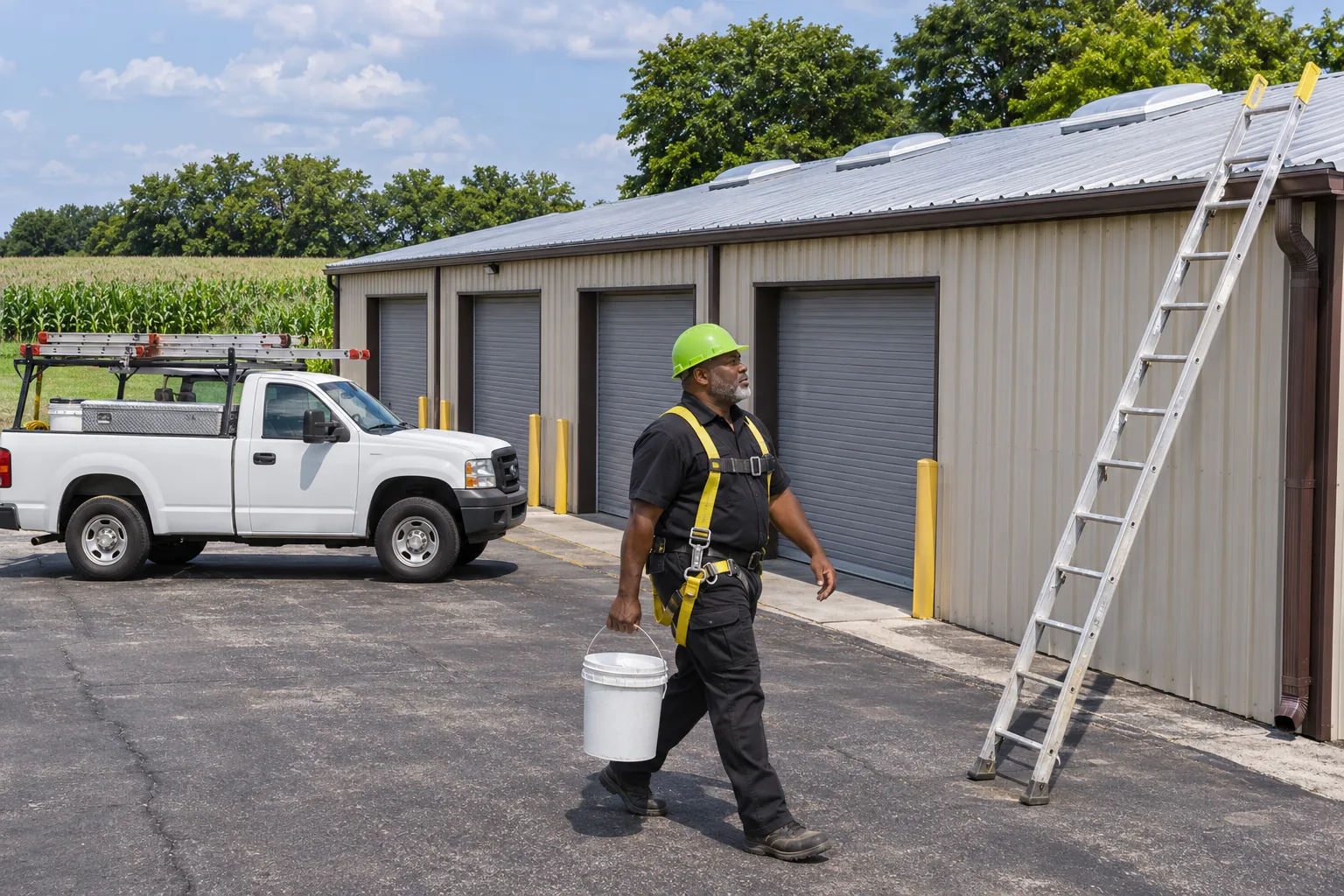
Tipton metal roof coating work often follows a storm. Hail dents panels and cracks old sealant, and years of freeze-thaw cycles loosen screws and open laps.
We sort the damage into what coating covers and what it will not. Dents with intact steel coat well; punctures, splits, and torn seams get repaired or replaced before anything goes on top.
Storm and winter damage shows up in a few clear forms. Here is how we treat each one.
Shallow dents with no cracks still keep water out. Coating goes right over them once the surface is cleaned and primed.
Hail that breaks through the steel leaves holes coating will not bridge. Those panels are replaced before the coat.
Impact shatters old sealant at the laps. We clean it out and close each lap with fabric and mastic.
Water that freezes inside a lap pushes it wider every winter. Those laps get stitched and sealed so the coating covers a tight joint.
Each cycle of cold and heat walks screws out a little more. Every loose one is tightened or replaced with a larger screw.
Ice loads and hail bend gutters out of line so water spills behind them. We straighten or replace the sections and seal the seams.
Most storm-worn steel roofs in Tipton take the metal coating process. These systems handle the exceptions.
Hail-dented and winter-worn steel roofs get the full process: repairs first, then primer, fabric, and the field coat.
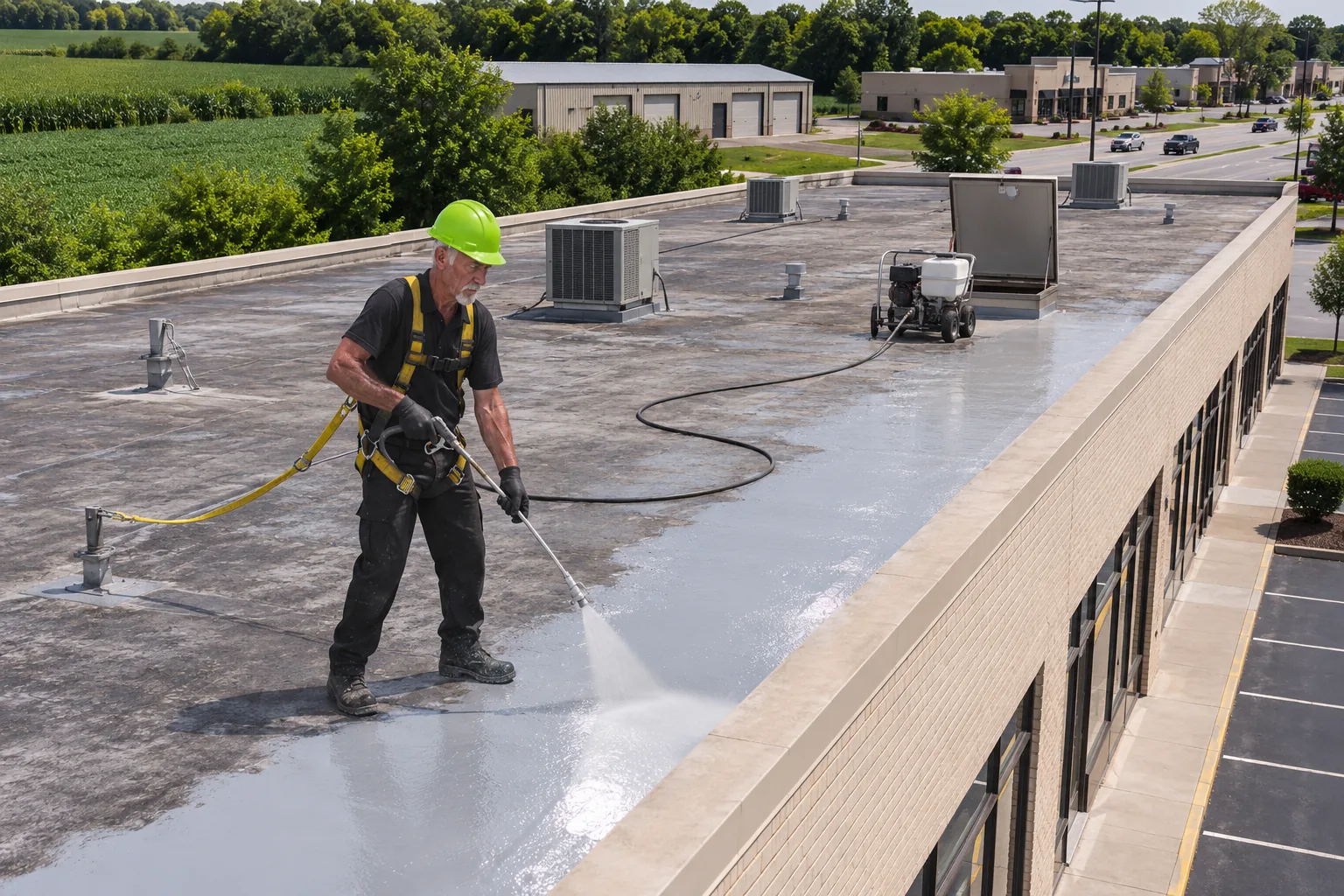
Low areas where dents now hold water after rain take silicone, which handles ponding.
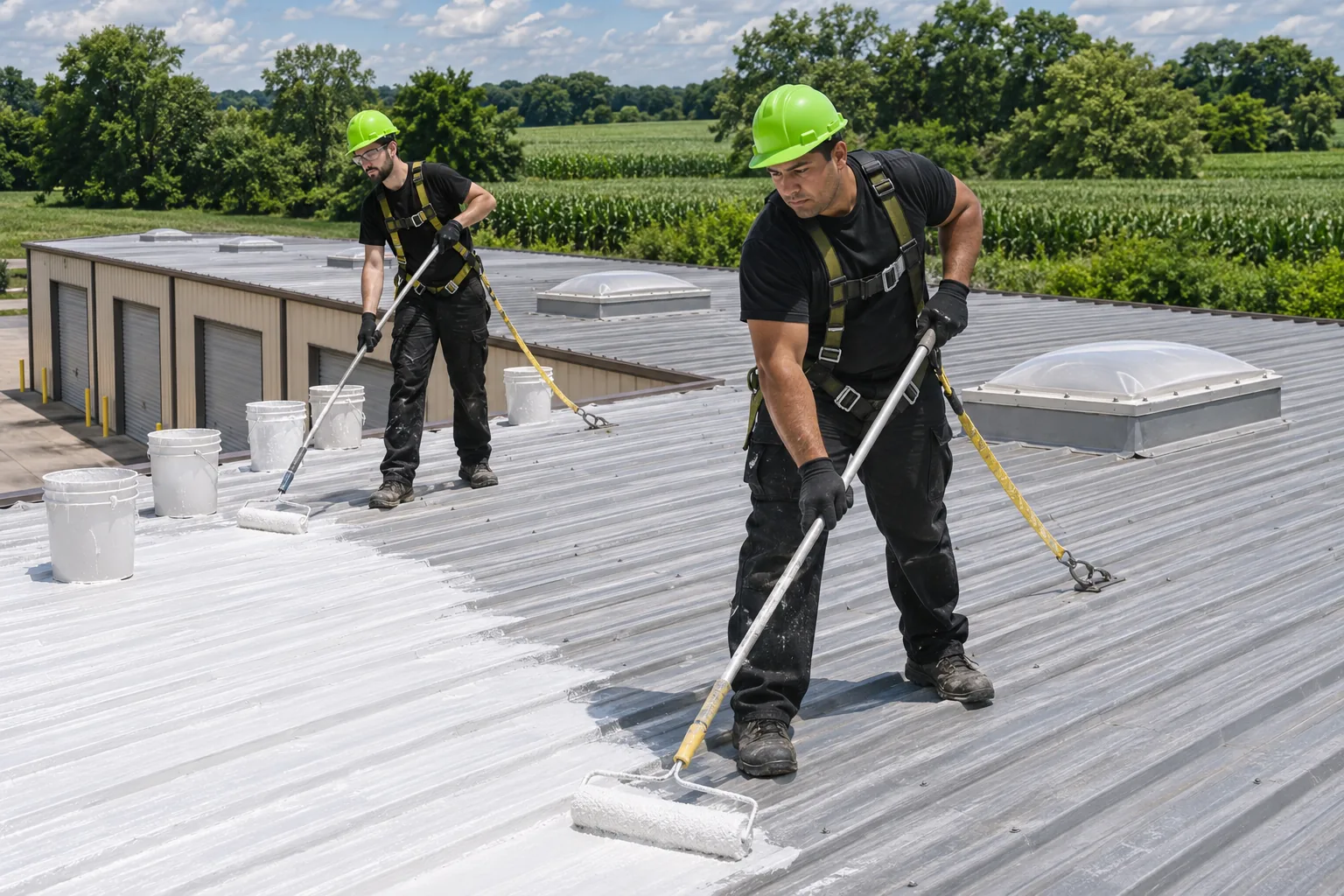
Pitched steel roofs with light hail marks and good drainage can take acrylic as a lower-cost coat.
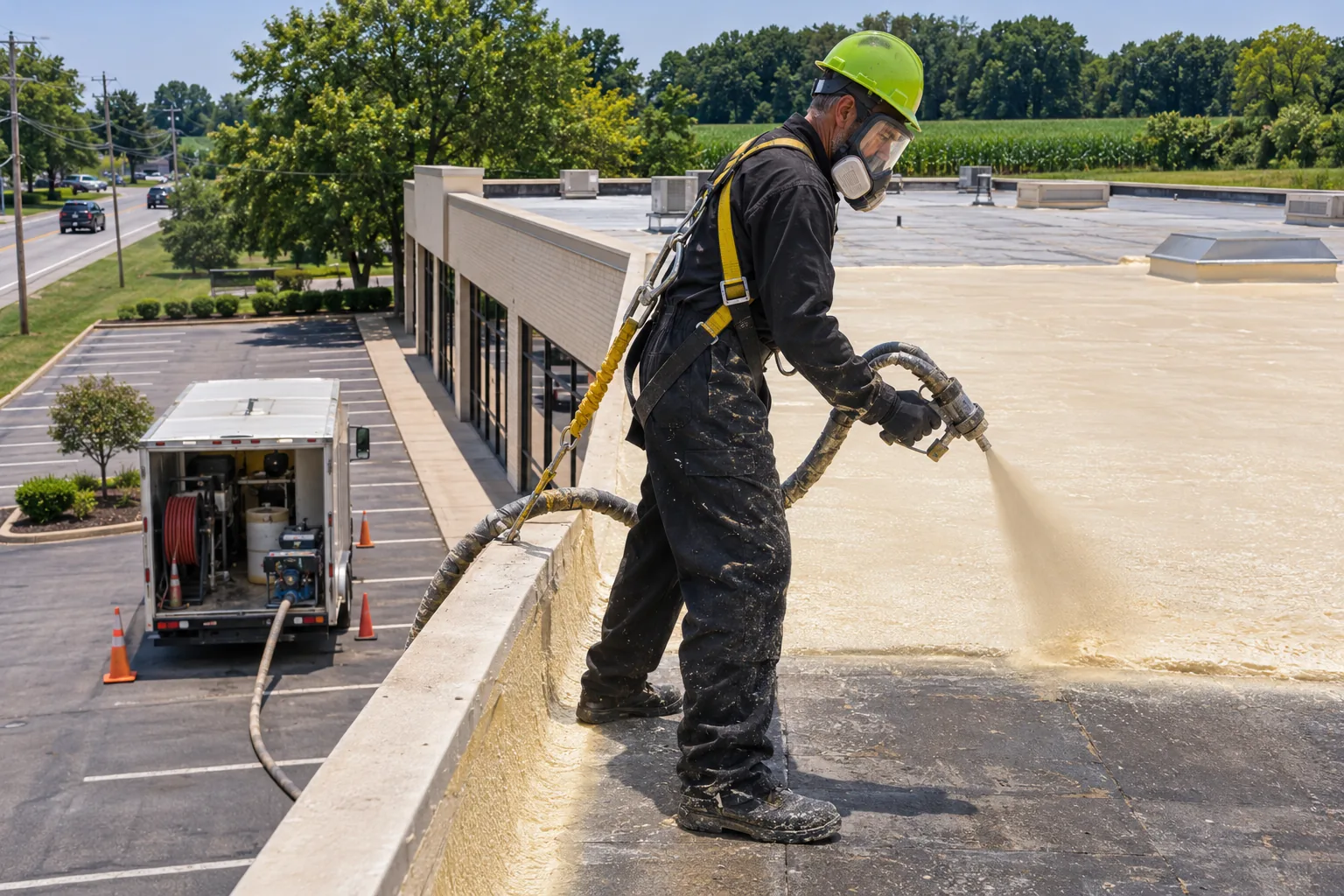
A roof with dents and leaks across the whole field can take spray foam, which fills low spots, plus a topcoat.
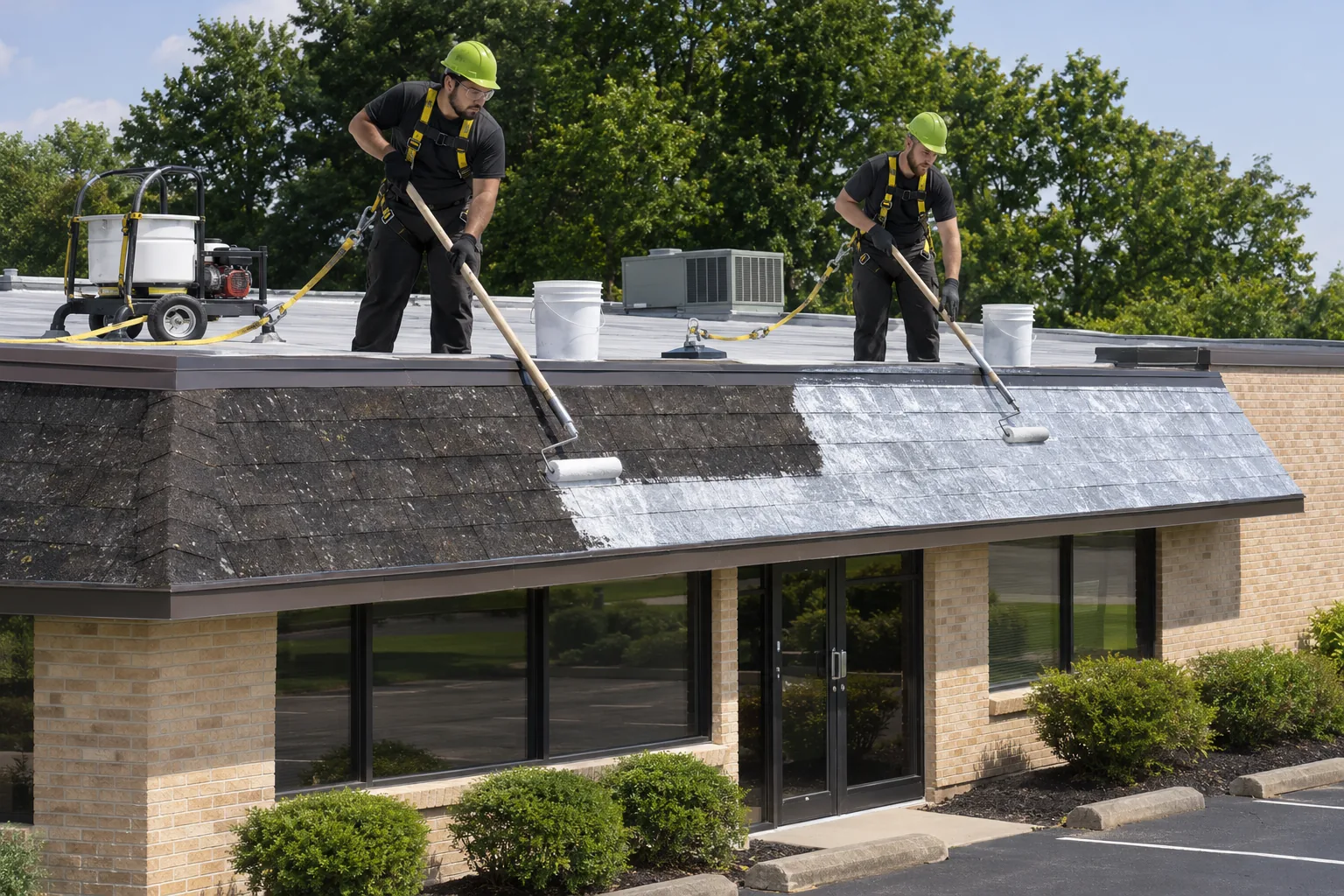
Shingled offices with hail bruising but flat, attached shingles can get a shingle-specific coating.
Dents are easy to see, but cracked lap sealant is not. A roof walk after a storm sorts out what coating can cover and what needs repair first.
For storm-worn roofs, coating seals the damage that is left once the broken parts are fixed.
Once punctured panels and cracked laps are repaired, a coating seals the dented field and the new work under one film, which stretches the life of the roof without new steel.
Fabric and coating hold the laps tight through freeze-thaw cycles that used to reopen them.
Primer and topcoat protect steel where hail chipped the factory paint.
Damage photos and thickness readings give you a clear record of the work.
Four stages, with the damage sorting done in the first.
We check dents panel by panel for cracks or holes, look at lap sealant and fasteners, and take moisture readings wherever water got in.
Punctured or split panels are replaced, cracked lap sealant is cleaned out, and laps opened by freeze-thaw are stitched and sealed.
The roof is washed, chipped paint at dents is primed, and fabric goes over every lap and curb edge.
Base and top coats go on at the data sheet rate, with wet film readings in dented areas where coating can pool or thin.
Tipton is one of six areas we cover. The nearby towns are below; if your building is beyond them, call us or send us a message.
Light industrial and flex buildings with several tenants under one roof.
Shops and warehouses with exposed-fastener steel roofs.
Agricultural buildings, shops, and storage roofs.
Retail, church, and storage buildings.
Around Tipton the effect is the same: panels move with the cold, screws loosen, laps open, and freezing water widens the gaps. We tighten fasteners and seal laps first so the coating covers a roof that stays put.
On a Tipton roof with dents and cracked sealant, coating works when the steel is not punctured or split. Holes, broken seams, and damaged screws get repaired first, and badly damaged panels are replaced.
Tipton is covered too, for commercial, industrial, and farm buildings. Every roof is checked for rust, loose screws, and panel damage, and damaged panels are replaced before coating.
Coating runs about $2.50 to $4.00 per square foot in our ballpark ranges. After hail, the number of panels to replace and laps to reseal moves the job within that range or adds to it.
That decision belongs to you and your insurer. Our damage photos and repair list are yours to share, and coating waits until you settle how the repairs will be paid.
Get a ballpark range from the form, or call to book a post-storm roof walk and damage photos.