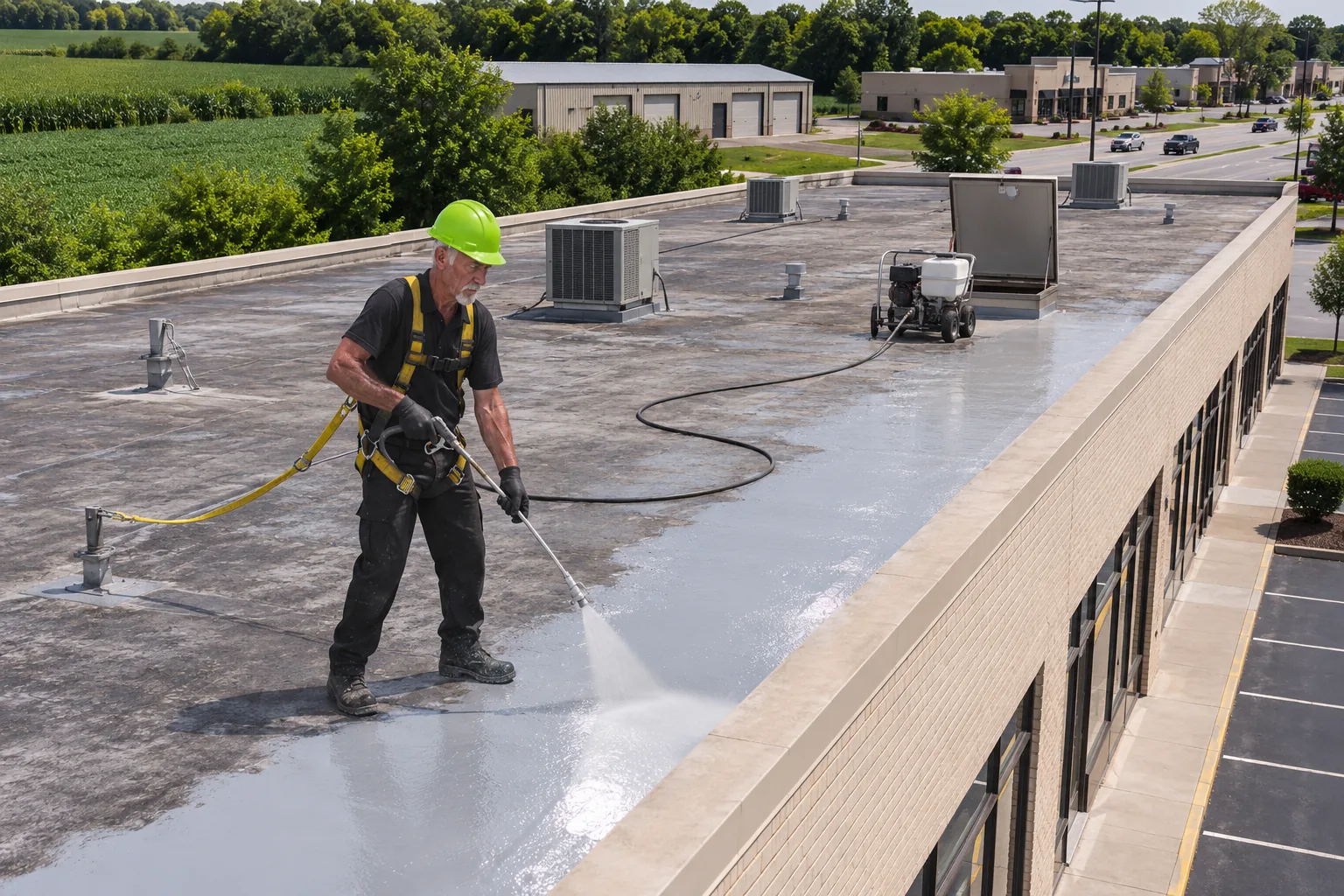
Silicone Roof Coating
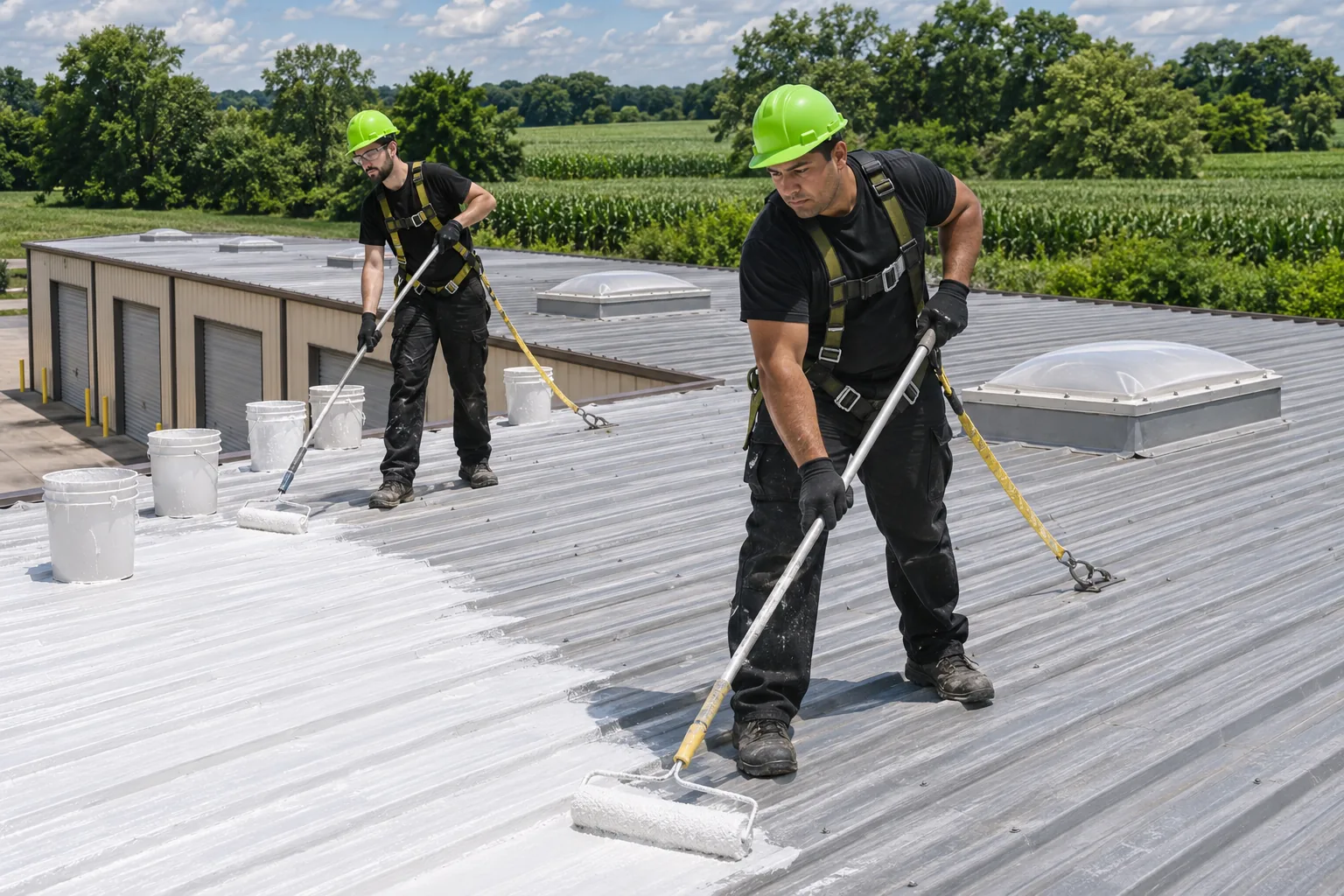
Low spots by gutters or curbs that hold water after a storm get silicone, which tolerates ponding better than acrylic does.
As a Noblesville commercial metal roof coating contractor, we restore exposed-fastener and standing-seam steel roofs in place, from rust treatment through the final measured coat.
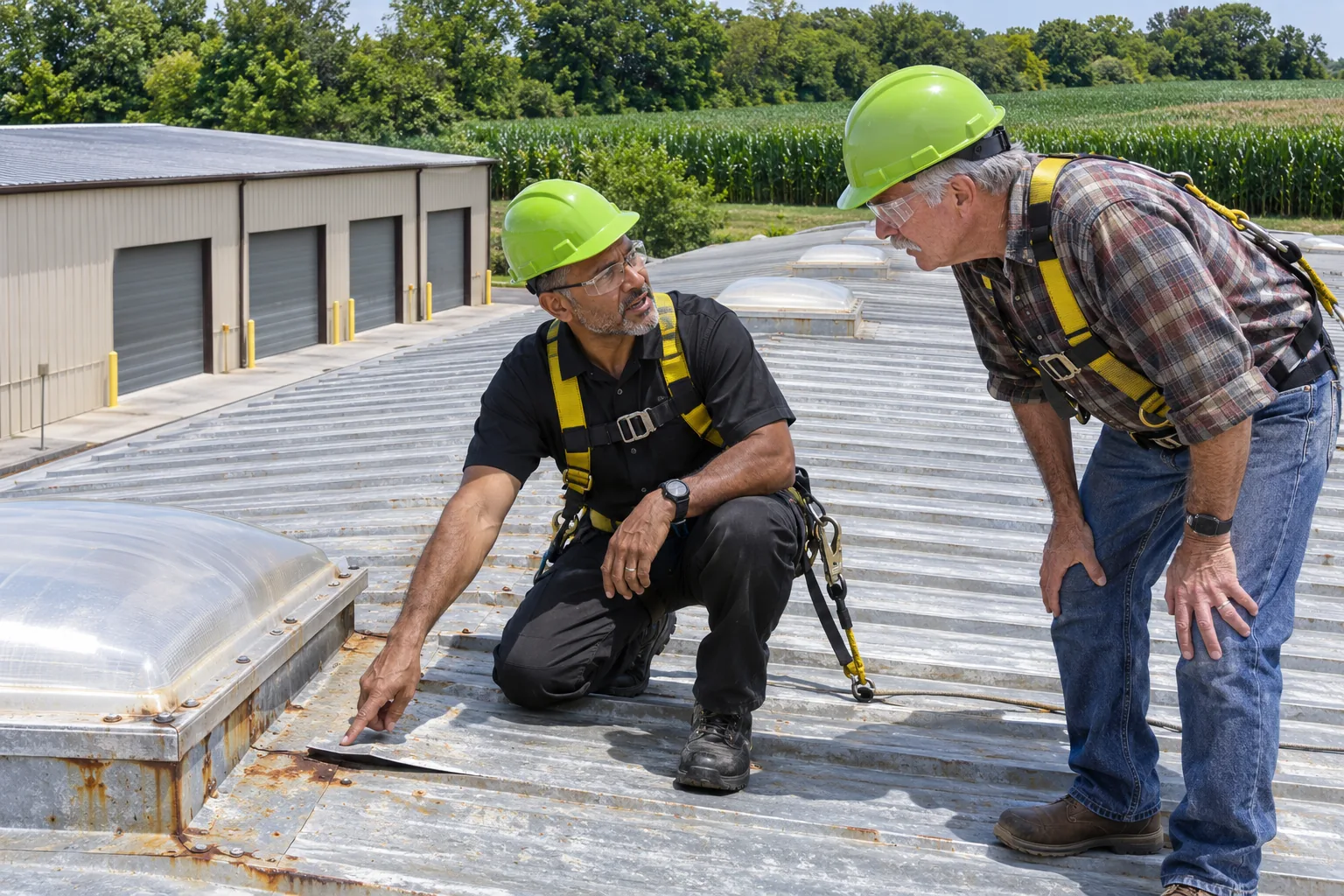
Noblesville commercial metal roof coating starts with the steel itself. We check how firmly the panels hold to the purlins, how deep the rust runs, and where water gets past the screws and laps.
Then we fix those details one by one and cover the whole field with a coating matched to the slope. The panels, the framing, and the building below all stay in service.
These are the conditions we treat on steel roofs before any coating goes on. The chip shows how soon each one needs work.
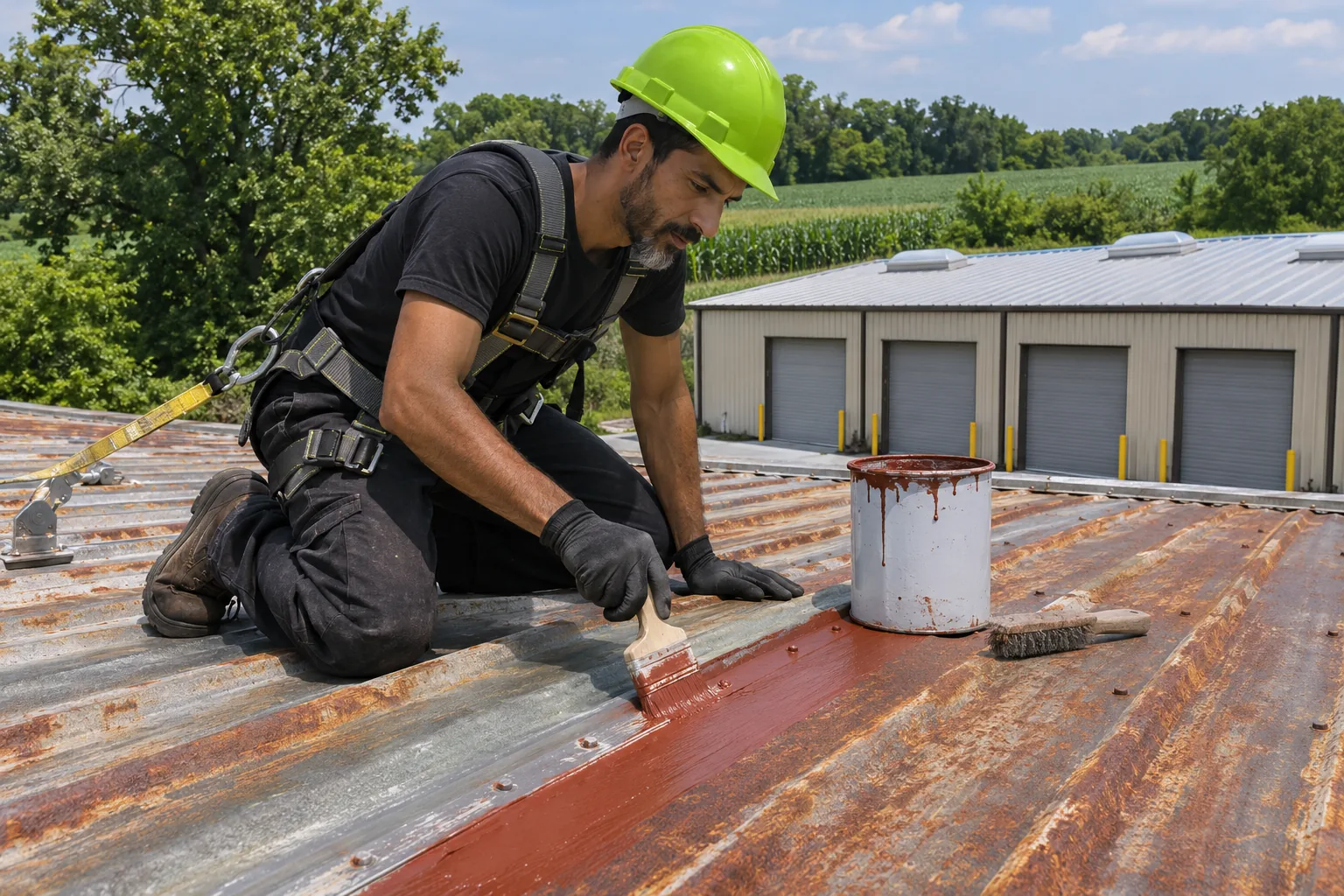
Loose scale is scraped and wire-brushed, chalk is washed off, and a rust-inhibiting primer goes on clean steel. Coating over flaking rust would peel within a season.
Rubber washers dry out and crack after years of sun and cold. Each screw gets a new fastener with a fresh washer, sized up where the hole has stretched.
Long panel runs grow and shrink with temperature, and the end laps take that movement. Fabric reinforcement lets the coating bridge the joint.
Foam closures under ridge caps shrink and let snow blow in. We replace the closures and seal the cap edges before the coat.
Orange stains on the underside of the deck mean water has been reaching the steel for a while. Those panels get checked first, since some may need replacing.
Leaf-packed gutters hold water against the cut ends of the panels all spring. We clear them, treat the rust at the eave, and coat the panel ends with the field.
The steel field gets the main coating, but parts of the same building often call for a different system. These four cover those cases.
Low spots by gutters or curbs that hold water after a storm get silicone, which tolerates ponding better than acrylic does.
Steep, fast-draining panels in full sun often finish in acrylic, a lower-cost water-based film that recoats easily later on.
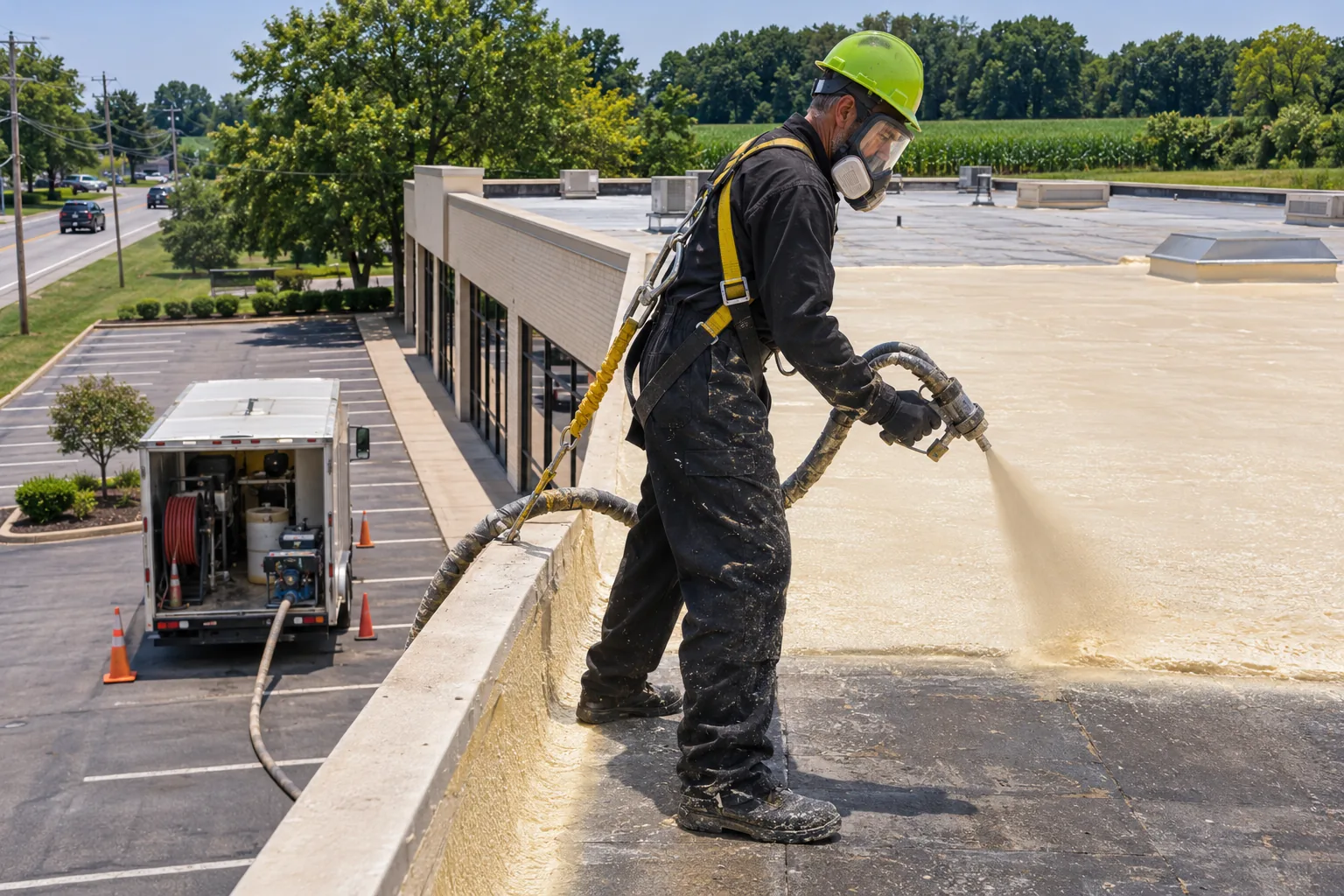
A roof that leaks at hundreds of laps and needs insulation can take spray foam and a topcoat as one continuous layer.
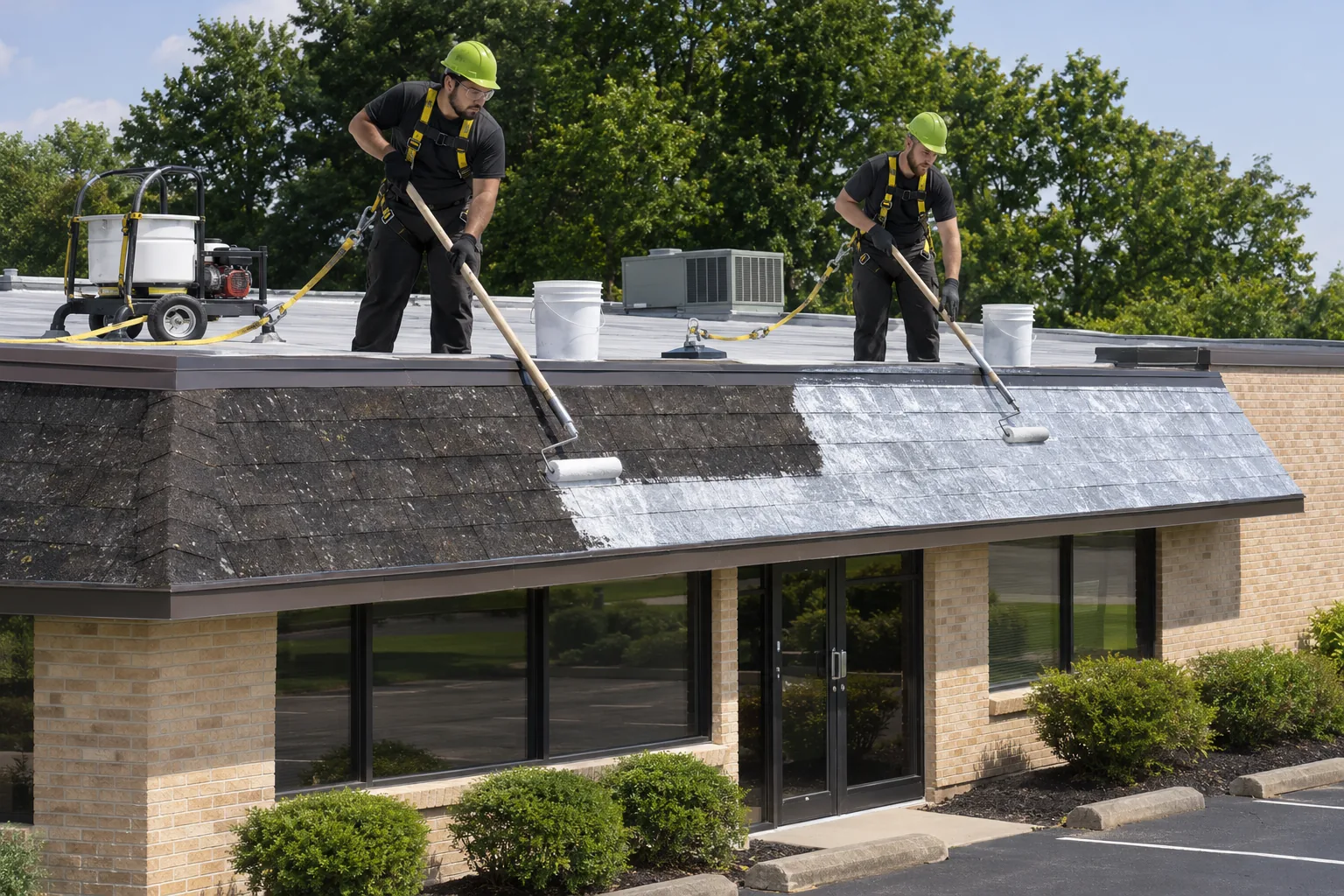
Buildings with a shingled office wing beside the steel roof can get a shingle-specific coating on that section.
A coated steel roof keeps its panels and framing, and the work happens without a tear-off or a closed building.
Restoration seals every screw, lap, and curb edge under one film while the original panels and purlins stay put, so you skip the cost and disruption of new steel.
Primer and topcoat keep water off cleaned steel at fastener holes, cut edges, and gutter lines, where rust starts first.
Light coating colors reflect summer sun that faded factory paint soaks up, keeping the deck cooler over the work floor.
Thickness readings and photos by roof section give you a baseline for later checks and recoats.
Streaks running down from each fastener row mean the washers have failed. Fixing them now keeps the job to screws and primer instead of new panels.
Four stages, in this order on every steel roof we coat.
We walk the panels, tap suspect areas, check the purlins and deck from inside, and take moisture readings near stains. You get photos and a repair list.
Rusted-through panels come out, every failed screw is replaced, and ridge closures and trim are reset so nothing loose sits under the coating.
A pressure wash removes chalk and dirt. Rust is brushed back and primed, then every lap and curb edge is striped with fabric and mastic.
Base and top coats go on at the data sheet rate. We check wet film on each pass and log readings by section for your records.
Two steel roofs can look alike from the parking lot and still need different answers. The left card shows a roof we coat.
Most roofs land between the two: a handful of bad panels replaced, then the rest coated.
Washing, scraping, and wire-brushing come first, then a rust-inhibiting primer matched to the topcoat. Rusted screws are swapped and any panel with holes is replaced. Primer only holds on clean steel, so this step decides how the coating wears.
Restoration covers the whole roof as it stands: cleaning, rust work, new fasteners, lap and curb reinforcement, panel repairs, primer, and a measured coating. Tenants and production keep going under the roof while crews work section by section.
Drainage decides it. Silicone handles water that sits near curbs and gutters, acrylic suits well-drained slopes and recoats easily, and spray foam fits roofs that need insulation. We recommend a system after the roof walk.
Thickness and prep matter more than the brand on the pail. A thicker film over clean, primed steel outlasts a thin one of any chemistry, and silicone holds up well where water ponds. We size the system to the roof slope and condition.
Permits run through the city Department of Planning and Development, and commercial work follows the Indiana Building Code. We ask the department about the scope before work starts and handle what it requires.
Send the roof size through the ballpark form for a price range, or call to book a roof walk and a written scope.