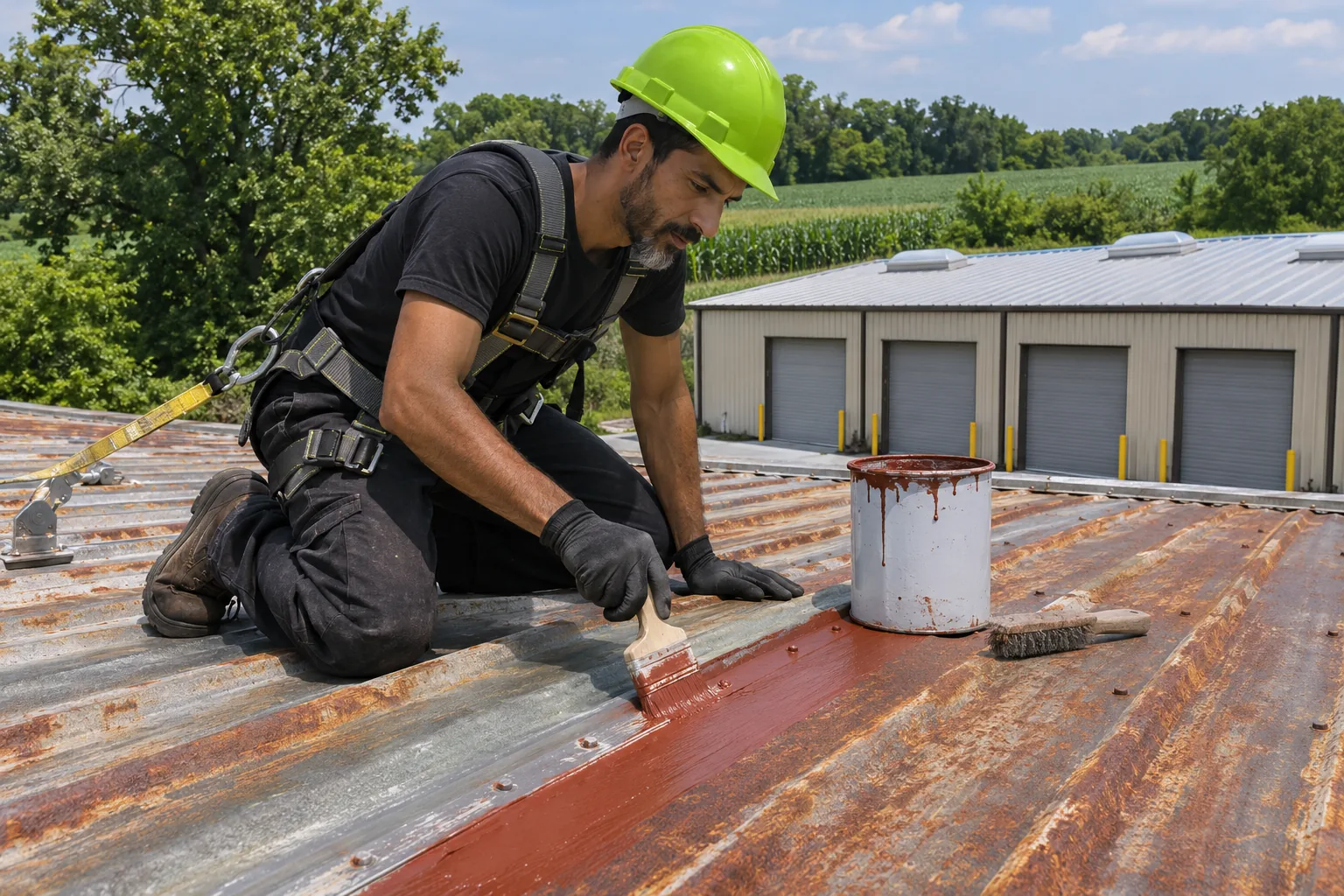
Commercial Metal Roof Coating
The full process for exposed-fastener and standing-seam steel: rust primer, a screw-by-screw fastener pass, fabric at every lap, and a field coat measured for thickness.
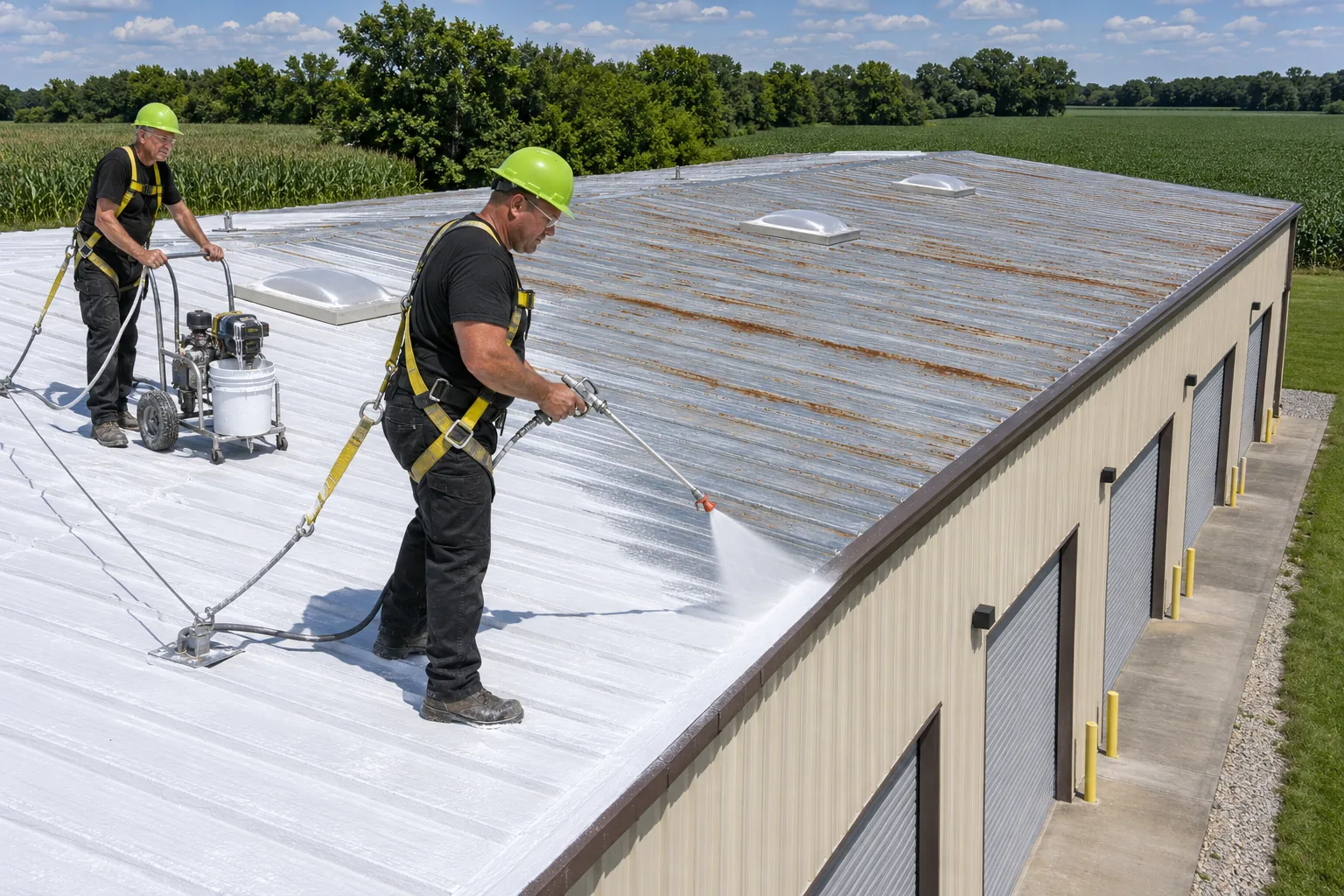
Our metal roof coating services in Noblesville cover five systems for commercial steel, low-slope, foam, and shingle roofs, each chosen after a roof walk.
Metal roof coating services in Noblesville start with the roof itself. Here is what each system does and the kind of roof it suits.
The full process for exposed-fastener and standing-seam steel: rust primer, a screw-by-screw fastener pass, fabric at every lap, and a field coat measured for thickness.
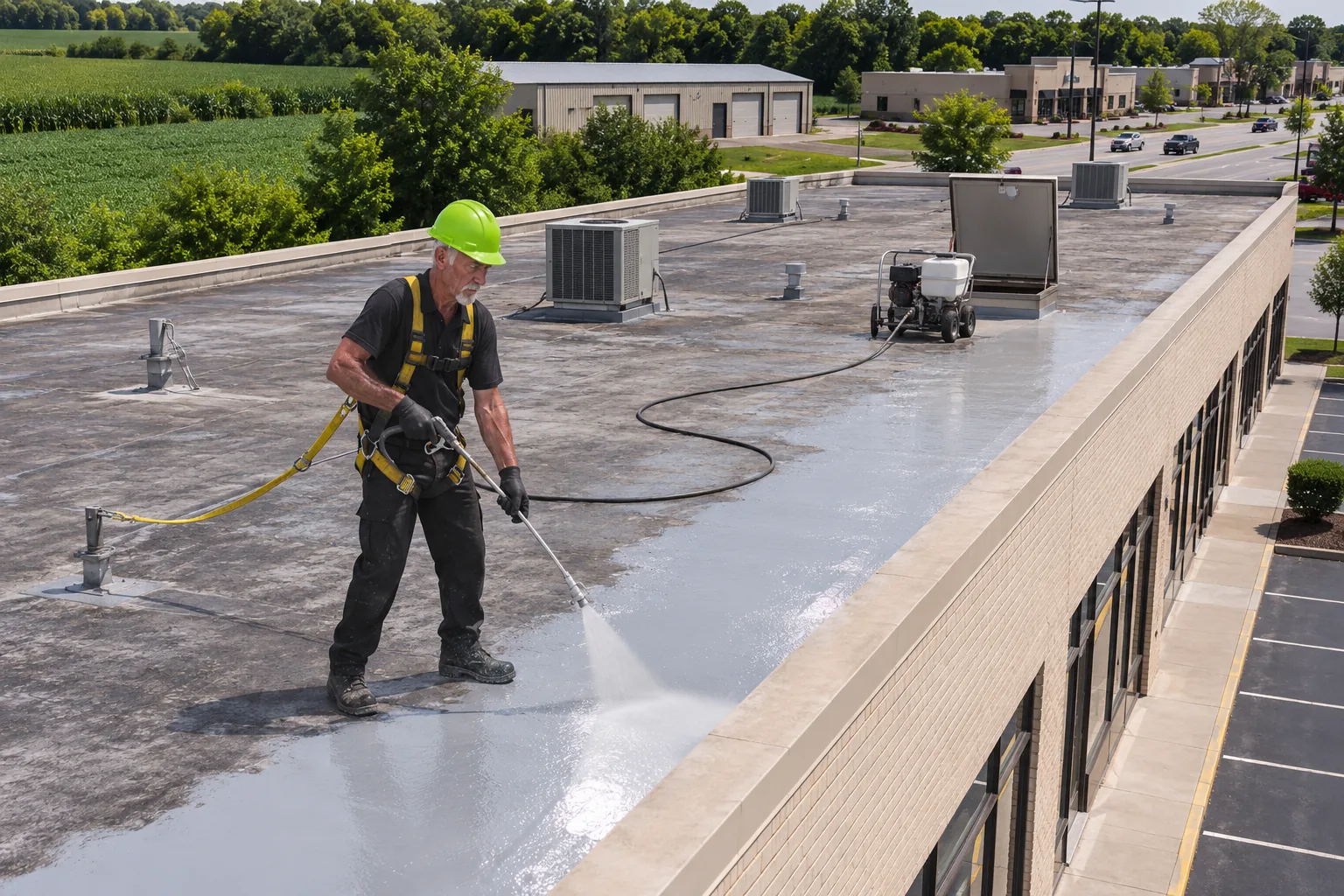
Low-slope metal and single-ply roofs with spots that hold water. Silicone tolerates ponding, stays flexible in cold weather, and builds thickness in fewer passes than acrylic.
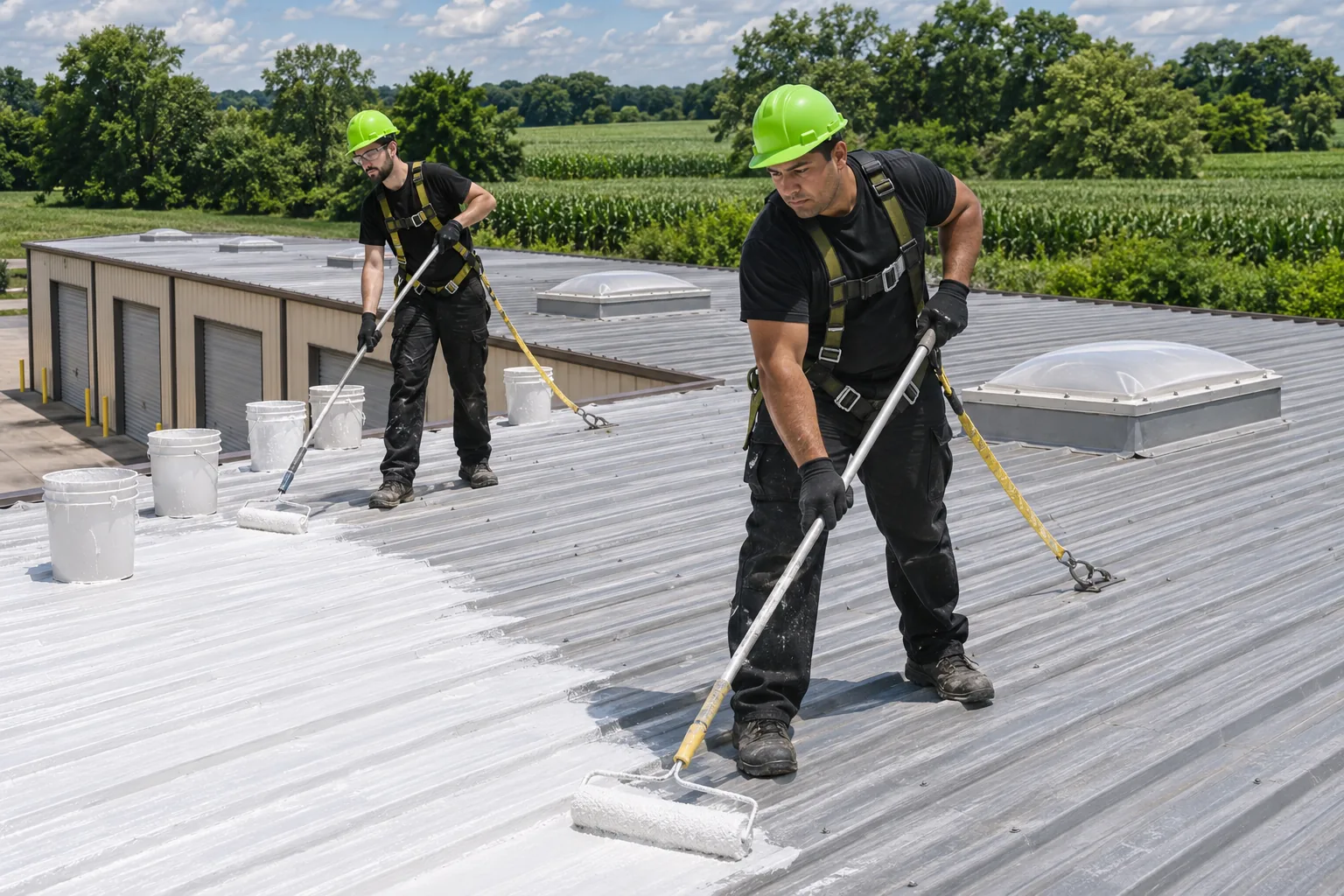
Pitched steel roofs that drain fast and sit in full sun. Acrylic is water-based, lower in material cost, bright enough to cut summer heat, and easy to recoat later.
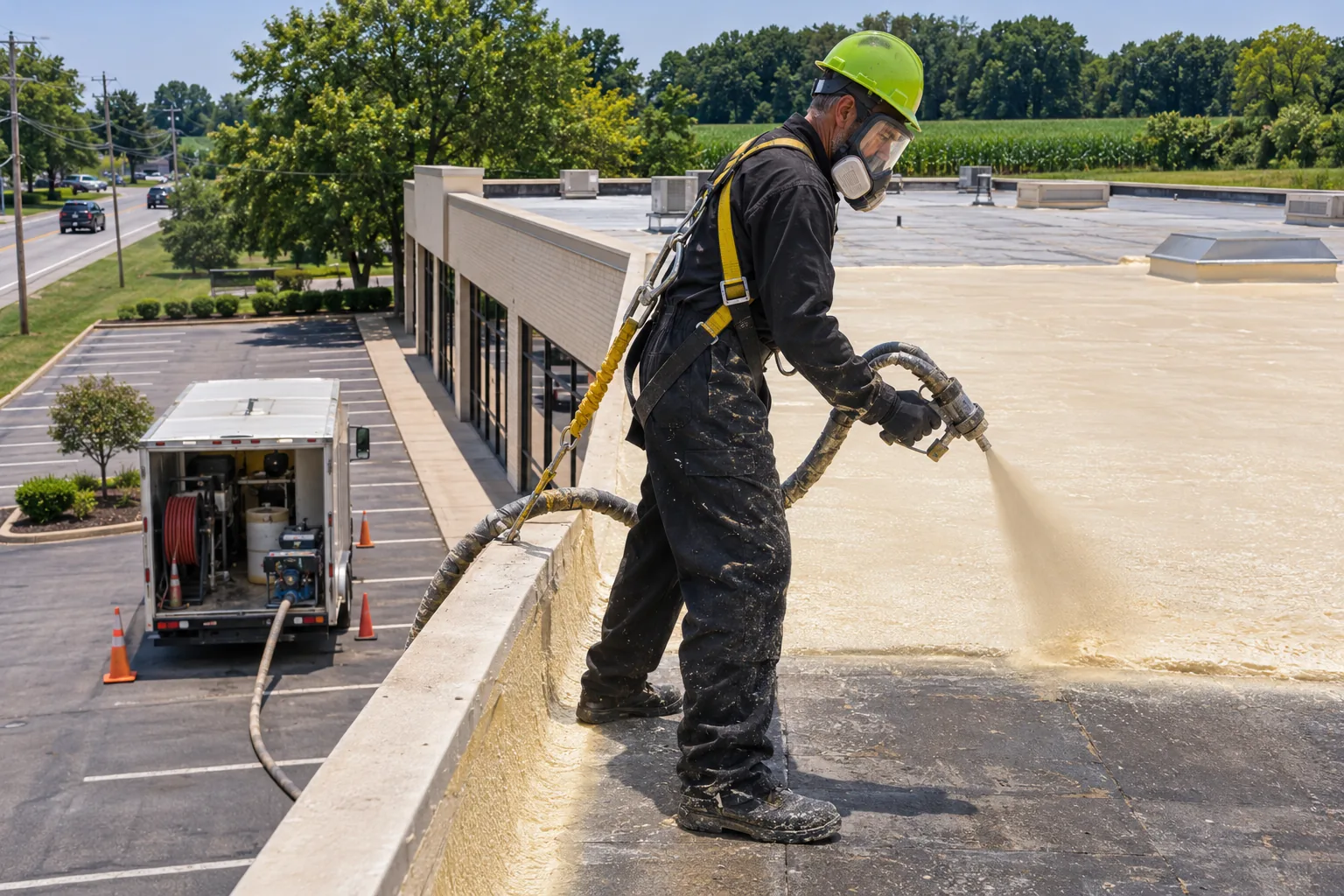
Roofs leaking at many laps that also need insulation or slope. Foam goes on as one continuous layer under a protective topcoat.
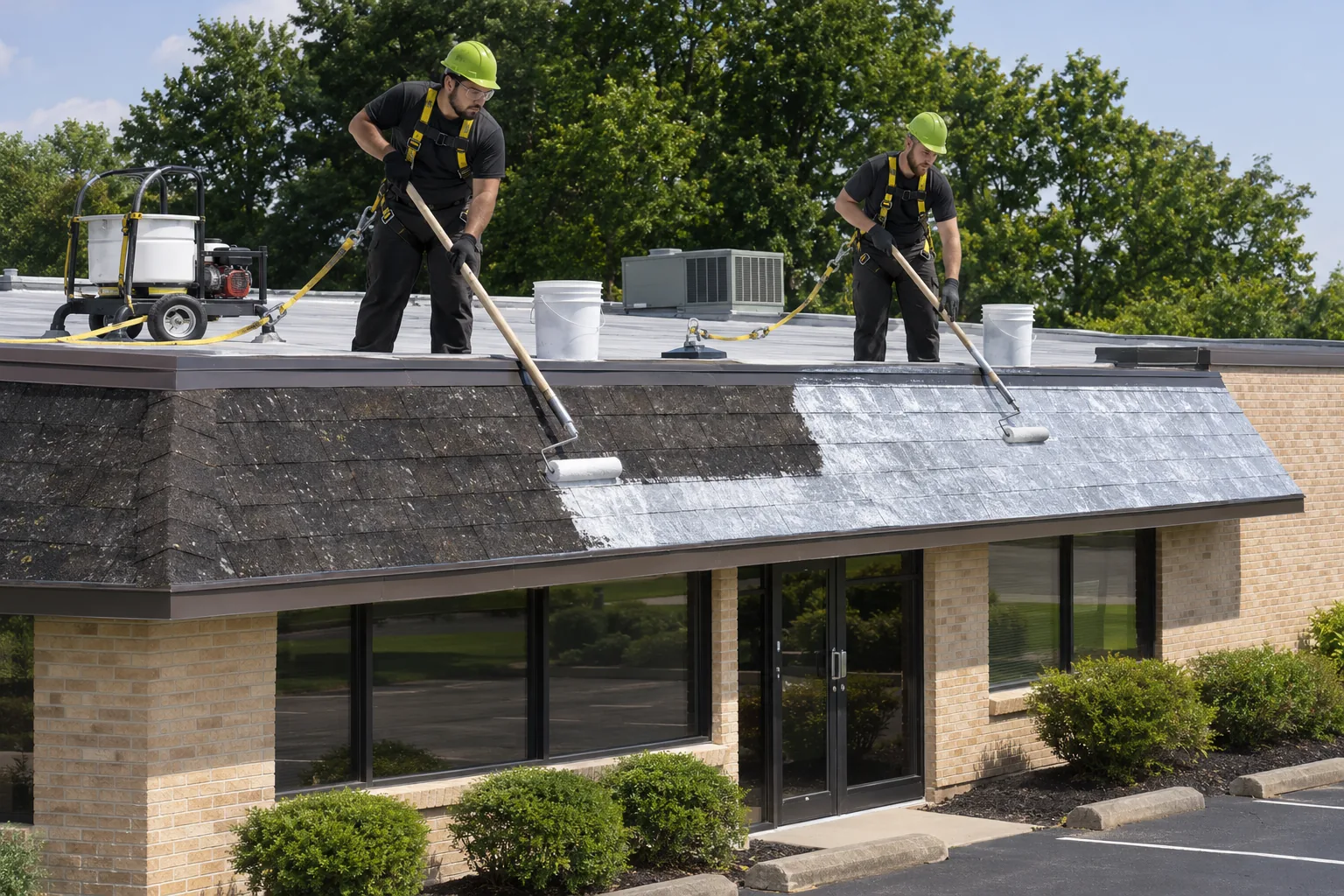
Commercial shingle roofs with flat, fastened shingles. A breathable shingle coating seals worn tabs and loose granules before a full reshingle comes due on church halls and offices.
These conditions show up across all five systems. The chip tells you how soon each one needs a look.
Light rust brushes back to clean steel and takes primer. It is the most common starting point for a metal coating job.
Low spots that hold water for two days steer the choice toward silicone or foam with built-up slope.
Granules in the gutters mean the shingles are wearing. Flat, fastened shingles can still take a shingle coating.
Bare metal over a heated building drips condensation in winter. Foam adds insulation while sealing the roof.
Panels on long buildings move with temperature and tear the lap sealant. Fabric and mastic close each lap before any system goes on.
Spreading stains mean water is already inside. A roof walk with moisture readings finds the source before more insulation soaks.
The biggest fork in the road is coating versus spray foam. These cards compare the two on the points that decide most jobs.
Shingle roofs follow their own path: coat while the shingles lie flat, reshingle once they curl.
Tell us the roof type, slope, and where the water shows up inside. A short call usually narrows it to one or two systems before the roof walk.
or call (463) 288-8746
Whatever the system, the work runs through the same four stages, and the written scope lists what happens in each one before work starts.
We check slope, drainage, rust, fasteners, seams, and moisture, then recommend a system in writing with photos to back it up.
Bad panels, failed screws, open laps, cracked curbs, and wet insulation are fixed so the coating covers a roof with no open leaks.
Washing, rust treatment, and primer suited to the chosen system, with intakes and nearby cars protected from spray.
Coating or foam goes on to the specified thickness, checked as it goes, and logged by roof section for your records.
Every system here shares a few advantages over tearing a roof off and starting over.
Coating and foam go over the existing roof after repairs, so the panels, deck, and framing stay in place while every lap, screw, and curb is sealed under one film.
No tear-off means no open roof and no debris inside, so tenants, services, and shipping keep going.
Light-colored coatings reflect summer sun and keep the deck and the space below cooler.
A worn coating can take a fresh coat later, which pushes full replacement further out.
Often it does. A steel warehouse might take acrylic on the pitched main roof and silicone on a flat rear addition that holds water. Each section gets the system that fits its slope.
Every job includes the repairs the roof walk finds: screws, laps, curbs, flashing, and replaced panels or shingles where needed. Coating over open leaks would only hide them.
Start with the ballpark form, which gives a coating range of about $2.50 to $4.00 per square foot. After the roof walk, the written scope shows the system, the repairs, and the price for your roof.
Rust gets treated first on any system. Then the ponding areas usually take silicone, and the rest of the roof takes whichever coat suits its slope.
The city Department of Planning and Development handles building permits and inspections. We ask the department about each coating scope and follow whatever it requires before work begins.
Sometimes. An old coating that still bonds tightly can be cleaned and recoated with a compatible product, while peeling or blistered coating has to come off first. An adhesion test on the roof settles it.
Roof size, repair count, and weather set the schedule. A small shop roof can wrap up within a week of good weather, while a large warehouse runs longer and gets done section by section.
Use the ballpark form for a coating range, or call to set up the roof walk that picks the right system.